
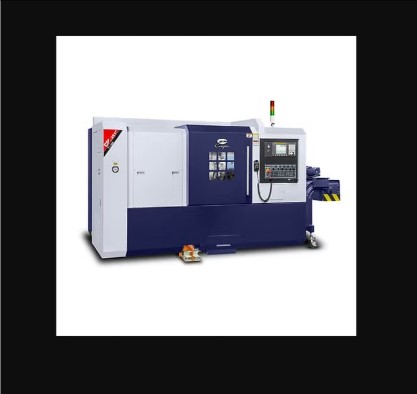
Modern manufacturing industries require precision, speed, and consistency to meet growing market demands. Producing large quantities of identical components within tight deadlines can be challenging without the right technology. A CNC turning center helps manufacturers achieve high-volume production by automating machining processes and ensuring consistent accuracy across every component produced.
Unlike traditional machining methods, CNC machines use computer-controlled programming to guide cutting tools and shape materials precisely. This automation allows manufacturers to produce large batches of parts with minimal variation while maintaining strict quality standards. As industries continue to demand faster production cycles and precise engineering, CNC turning technology has become an essential solution for efficient manufacturing operations.
High-Speed Production Capabilities
One of the key advantages of a CNC turning center is its ability to operate at high speeds without sacrificing accuracy. The machine rotates the workpiece while cutting tools remove material to create the desired shape. This process allows manufacturers to produce cylindrical and complex components quickly.
A CNC turning center can operate continuously for long periods, which is essential in high-volume production environments. Automated operations reduce idle time and allow manufacturers to maintain a steady production flow. This capability is especially valuable in industries where thousands of identical components must be produced efficiently.
Supporting Continuous Manufacturing
High-volume production requires machines that can run reliably for extended periods. CNC turning centers are designed with durable components and advanced controls that allow them to maintain consistent performance during long production cycles.
Because the machine follows pre-programmed instructions, it can repeat the same machining process over and over without requiring frequent adjustments.
Consistency and Precision in Every Part
Consistency is one of the most important requirements in mass production. Even small variations in part dimensions can create problems during assembly or affect product performance.
A CNC turning center ensures that every part produced matches the exact specifications defined in the machining program. The computer-controlled system guides the cutting tools with extreme precision, allowing the machine to produce identical components with minimal deviation.
Achieving Tight Manufacturing Tolerances
Precision engineering industries such as automotive, aerospace, and medical manufacturing require extremely accurate components. CNC turning centers are capable of maintaining tight tolerances, ensuring that each part meets strict design standards.
This level of accuracy reduces production errors and ensures that finished products perform reliably.
Performing Multiple Operations Efficiently
Modern turning centers are capable of performing several machining operations in a single setup. Tasks such as facing, threading, drilling, and boring can often be completed without removing the workpiece from the machine.
A CNC turning center reduces the need for repeated setups, which helps streamline the production process. Completing multiple operations in one cycle saves time and increases overall efficiency.
Reducing Production Time
When machining processes are combined into a single workflow, manufacturers can produce parts more quickly. This efficiency is essential for businesses that must meet large production demands within limited timeframes.
Automated tool changers and advanced programming features further improve productivity by minimizing manual intervention.
Cost Efficiency in Large-Scale Manufacturing
Although CNC machines require an initial investment, they become highly cost-effective in high-volume production environments. Automation reduces the need for manual labor while improving productivity and reducing material waste.
A CNC turning center helps manufacturers optimize their production processes, which lowers the cost per part when producing large quantities of components.
Minimizing Errors and Material Waste
Precision machining reduces the likelihood of defective parts. When fewer errors occur during production, businesses spend less time and money on rework or wasted materials.
Efficient machining processes also improve resource utilization, making large-scale production more economically sustainable.
Conclusion
Efficient high-volume production requires reliable machinery capable of delivering speed, precision, and consistency. A CNC turning center helps manufacturers achieve these goals by automating machining processes and producing accurate components in large quantities. Its ability to maintain consistent performance, perform multiple operations, and reduce production costs makes it an essential tool in modern manufacturing. When used alongside a CNC milling machine, manufacturers can further expand their machining capabilities and produce complex parts efficiently while maintaining the high standards required in advanced industrial production.