
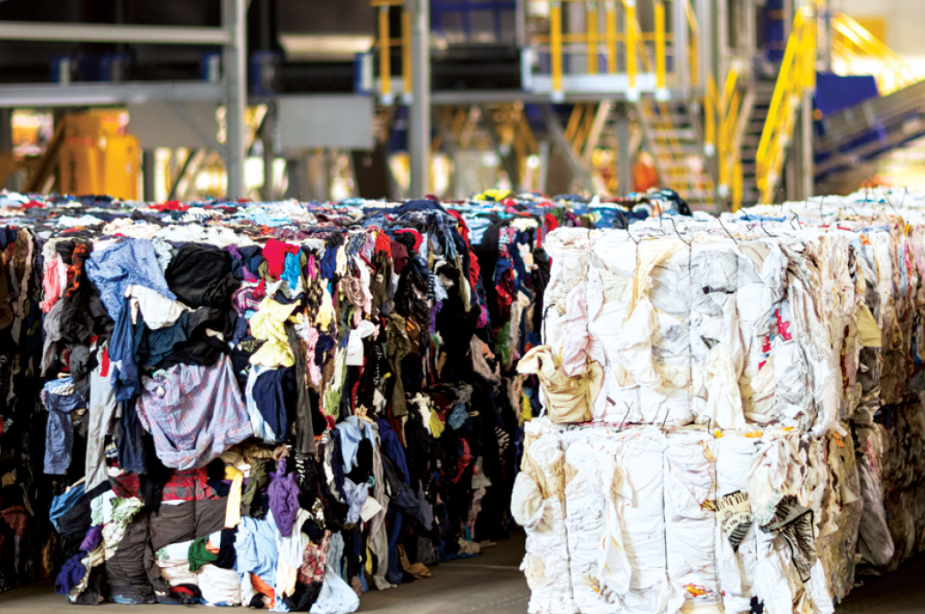
The textile industry has long been recognised as one of the most resource-intensive and environmentally impactful sectors. With mounting pressure from regulations, consumer awareness and sustainability goals, the concept of textile recycling is moving from niche initiative to mainstream necessity. Today, a new generation of technologies is transforming how textile waste is handled, sorted and reintegrated into production — enabling a true circular economy for fabrics and fibres.
The Challenge: Why Textile Recycling Matters
Globally, millions of tonnes of garments and textile products reach the end of their useful lives each year. Much of that ends up in landfill or incineration, representing a colossal waste of resources and energy. The conventional linear model — make, use, discard — is simply unsustainable. Textile recycling not only reduces landfill and incineration burdens, but also conserves virgin raw materials, reduces water and energy consumption, and lowers greenhouse-gas emissions.
However, achieving effective textile recycling has been hampered by several technical and logistical challenges: textile collections are often mixed and contaminated, fibres may be blended (for example cotton/polyester), sorting is inefficient, and recycled fibres historically degrade in quality compared to virgin fibres. That’s where the new wave of technologies is making a difference.
Advanced Sorting: Automation and Artificial Intelligence
Accurate sorting of textile waste is foundational for efficient textile recycling. Without reliable separation of fibre types, colours, blends and contaminants, downstream recycling becomes inefficient or uneconomic. Recent innovations include automated conveyor-based systems using near-infrared (NIR) sensors, hyperspectral imaging, robotics and artificial intelligence (AI).
For example, some companies have developed fully automated sorting lines that use NIR sensors and machine learning to identify material type, composition and colour from pre-consumer and post-consumer textile waste. Academic research likewise describes AI-enabled industrial sorting pipelines that improve classification accuracy and throughput in recycling-oriented textile systems. These advances mean that more textile waste can be channelled into high-quality recycling rather than down-cycled or discarded, and with traceability of material flows.
Mechanical and Fibre-to-Fibre Recycling
Once textile waste is properly sorted, the next step is reprocessing into usable fibre. Mechanical recycling remains widely used: fabrics are shredded, fibres opened, cleaned and re-spun into yarns or non-woven materials. Recent upgrades in shredding and re-spinning technologies have improved fibre integrity, enabling better quality recycled fibres. This approach works particularly well for homogeneous waste streams (e.g., pure cotton, pure polyester).
However, mechanical recycling has limitations — notably in handling complex fibre blends and delivering recycled fibres with the same strength and quality as virgin fibres. Thus a new generation of approaches is gaining ground.
Chemical and Enzymatic Recycling: Closing the Loop
To address the limitations of mechanical methods and enable a truly circular textile economy, chemical and enzymatic recycling technologies are emerging. These methods break down polymers into their monomers or basic building blocks and then re-polymerise them into new high-quality fibres, often approaching virgin-grade performance.
For example, several companies are developing depolymerisation processes for polyester-rich waste, while others are using enzymatic recycling to recycle nylon 6,6 and polyester blends, enabling materials that previously were almost impossible to recycle to be re-used. These technologies hold promise for high-value recycled textiles rather than just low-grade fill or insulation applications.
Fibre Innovation and Next-Gen Materials
Beyond simply recycling waste, some technologies are creating new materials from waste or by-products and closing supply chains. For instance, new processes have developed “Next-Gen Cotton” and “Next-Gen Polyester” fibres that achieve high performance and claim up to 85% reductions in water and carbon emissions compared with virgin equivalents. Such innovations mean that textile recycling isn’t just about salvaging waste — it’s about forging new, sustainable feedstocks for fashion and textiles.
Integration into Industry: Policy, Scale & Traceability
For textile recycling to scale, the technology must mesh with industry logistics, regulation and supply-chains. In Europe, for example, new mandates require separate collection of textile waste by 2025, putting pressure on systems to ramp up. Companies are building traceability systems (batch-level tracking of waste through sorting and processing streams) to deliver transparency and accountability to brands and consumers. Scalability is also improving, with major plants capable of handling tens of thousands of tonnes of waste per year being announced.
Nonetheless, challenges remain. Collection infrastructures need to improve (especially in developing markets), the economics of recycled materials must become competitive with virgin inputs, and there must be coordination across brands, recyclers and governments. Still, the momentum is clear.
Benefits and Impacts of the New Generation
When fully deployed, these next-gen recycling technologies produce multiple positive effects:
- Reduced consumption of virgin raw materials (cotton, polyester, nylon)
- Lower water and energy use per unit of textile produced
- Fewer textiles sent to landfill or incineration
- Enhanced ability to recycle blended and synthetic textiles that were previously difficult
- Improved supply-chain transparency and circularity
Thus the shift from linear make-use-discard to circular make-use-recycle becomes increasingly viable.
Conclusion
The evolving field of textile recycling is undergoing a genuine transformation. From automated AI-based sorting systems to chemical and enzymatic processes that regenerate fibres at near-virgin quality, the industry is positioning itself around circularity rather than disposal. The emergence of next-generation feedstocks and traceability systems further strengthens the case for a sustainable textiles future. As these technologies scale and become cost-effective, textile manufacturers, brands and waste management systems alike will benefit — helping to close the loop on material flows and reduce environmental footprint. Investing in and deploying advanced recycling systems will also support broader infrastructure needs, including waste management equipment, so that the full chain of collection, sorting, processing and re-manufacture functions efficiently.