
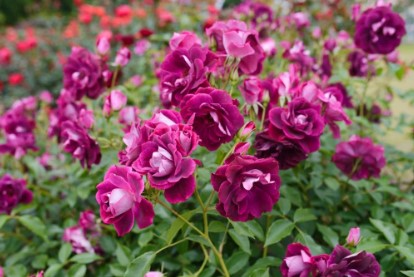
Iceberg roses are among the best-known landscape roses for gardeners seeking abundant blooms and a relatively adaptable flowering shrub. First introduced in Germany in the 1950s, the original Iceberg rose is recognized for its clusters of white flowers and repeat-blooming habit. It is a floribunda rose, a class known for producing flowers in clusters rather than as mostly solitary blooms. (roses.org)
For gardeners considering these Iceberg roses for borders, beds, containers, or informal hedges, understanding sunlight, soil, watering, pruning, and disease management is essential. Good planting conditions can help the shrub develop healthy foliage and produce flowers throughout the growing season.
What Are Iceberg Roses?
Iceberg is a floribunda rose cultivar introduced by German rose breeder Reimer Kordes in 1958. It became widely recognized for its white flowers, repeat flowering, and vigorous growth. (roses.org)
The flowers typically appear in clusters, creating a strong visual display when the plant is in bloom. The cultivar is generally grown as a shrub and can be useful in landscape settings where a continuous supply of flowers is desired.
There are also Iceberg roses in other color forms, including pink and burgundy cultivars, but the original white-flowering Iceberg remains particularly recognizable.
Where Should You Plant Iceberg Roses?
Choosing an appropriate planting site is one of the most important steps in growing healthy Iceberg roses. Roses generally perform best in locations receiving several hours of direct sunlight each day.
Good air circulation is also valuable. Crowded planting conditions can keep foliage damp for longer periods, potentially increasing the risk of fungal diseases. The American Rose Society recommends providing roses with adequate sunlight and good air movement as part of maintaining healthy plants. (roses.org)
Avoid placing the plant directly against walls or structures where airflow is restricted. Leave enough space between individual shrubs for their mature width.
What Type of Soil Do Iceberg Roses Need?
Roses generally prefer fertile, well-drained soil. Soil that retains enough moisture for root growth without remaining waterlogged provides a better environment for healthy development.
Before planting, gardeners can improve poor soil by incorporating appropriate organic matter. A soil test can also provide useful information about pH and nutrient availability.
The exact soil requirements can vary according to local conditions, but drainage should remain a priority. Constantly saturated soil can reduce oxygen around roots and contribute to root-related problems.
Raised beds can be useful in areas where native soil drains poorly. Containers are another option when gardeners need greater control over the growing medium.
How Much Water Do Iceberg Roses Need?
Newly planted roses require regular watering while their roots become established. Once established, watering should be adjusted according to weather, soil type, temperature, and rainfall.
Deep watering is generally preferable to frequent, shallow watering because it encourages moisture to penetrate deeper into the root zone. However, watering frequency should not follow a fixed schedule regardless of conditions.
Morning watering can be beneficial because leaves have more opportunity to dry during the day. Avoid routinely wetting foliage when irrigation can be directed toward the soil.
During periods of hot or dry weather, plants may need additional water. At the same time, gardeners should monitor the soil rather than watering automatically, particularly after rainfall.
When Should You Prune Iceberg Roses?
Pruning helps maintain the shape, structure, and vigor of rose plants. The appropriate timing depends partly on climate and the type of pruning being performed.
Major annual pruning is commonly carried out when the plant is dormant or beginning its new growth cycle. The American Rose Society recommends removing dead, damaged, or diseased wood and cutting back appropriately to encourage healthy new growth. (roses.org)
For Iceberg roses, removing spent flowers can also help maintain a tidy appearance and encourage continued flowering. This process is known as deadheading.
When making pruning cuts, use clean, sharp tools. Avoid leaving damaged or ragged cuts because clean cuts generally heal more effectively.
Should You Deadhead Iceberg Roses?
Deadheading is not essential for every rose, but it can improve the appearance of the plant and encourage repeat flowering in many cultivars.
To deadhead, remove faded flower clusters before they become visually unattractive. The exact cutting point depends on the plant’s growth habit and the desired shape.
Regularly removing spent blooms can also prevent the plant from putting energy into developing hips. However, gardeners interested in rose hips or wildlife value may intentionally leave some flowers to develop fruit.
How Can You Encourage More Blooms?
Flower production depends on several factors rather than fertilizer alone. Adequate sunlight, appropriate watering, healthy soil, pruning, and pest and disease management all influence flowering.
Roses should not be heavily fertilized simply to force additional blooms. Excessive fertilizer, particularly nitrogen, can encourage leafy growth at the expense of flowering and may create softer growth that is more vulnerable to some pests.
A soil test can help determine whether nutrients are actually deficient. Fertilizer applications should then follow product directions and local growing recommendations.
Mulching around the base can help conserve soil moisture and moderate temperature fluctuations. Keep mulch away from direct contact with the main stems to reduce moisture-related problems.
What Diseases Affect Iceberg Roses?
Like other roses, Iceberg can be affected by fungal diseases. Black spot and powdery mildew are among the common diseases encountered by roses, although prevalence varies according to climate and growing conditions.
Black spot typically produces dark lesions on leaves and can cause premature leaf drop. Powdery mildew appears as a white, powdery coating on leaves and shoots.
Good cultural practices can reduce disease pressure. These include adequate spacing, good airflow, proper watering practices, removal of severely affected plant material, and regular inspection.
The American Rose Society emphasizes sanitation and good growing conditions as important components of rose care. (roses.org)
What Pests Should Gardeners Watch For?
Roses can attract aphids, thrips, spider mites, Japanese beetles, and other insects. Damage can appear as distorted leaves, stippling, holes, flower damage, or weakened new growth.
Not every insect requires treatment. Some insects are harmless or may serve as food for beneficial organisms. Before applying an insecticide, identify the pest and determine whether the level of damage warrants intervention.
Regularly examining young shoots, leaf undersides, and flower buds can help gardeners detect problems early.
Can Iceberg Roses Grow in Containers?
Some Iceberg rose plants can be grown in sufficiently large containers, provided the container offers adequate drainage and enough root space.
Container-grown roses generally require more frequent monitoring of water and nutrients because their growing medium has less moisture and nutrient storage capacity than garden soil.
The container should also be large and stable enough to support the mature plant. Smaller containers can dry rapidly during hot weather, while poor drainage can create root problems.
Container placement should provide sufficient sunlight and airflow, just as it would for roses planted directly in the ground.
How Do Iceberg Roses Fit Into a Landscape?
Iceberg roses can be used in several landscape designs. Their flowering clusters can provide seasonal color along pathways, garden borders, entryways, and mixed planting beds.
They can also be combined with ornamental grasses, perennials, shrubs, or other flowering plants. When combining plants, consider mature dimensions so that neighboring vegetation does not eventually crowd the rose.
Gardeners can also use groups of plants to create a stronger visual effect than isolated specimens. Repeating the same rose throughout a bed can provide continuity while allowing other plants to provide contrasting foliage and flowering periods.
Conclusion
Growing Iceberg roses successfully begins with choosing a sunny, well-drained location and providing appropriate water, nutrition, pruning, and airflow. Regular inspection can also help gardeners identify pests and diseases before they become serious problems. For gardeners comparing rose bushes, Iceberg offers a combination of clustered flowers, repeat blooming, and adaptable landscape use that can work well in many garden designs. Its performance will still depend on local climate and care, so planting conditions should be evaluated before installation. With suitable sunlight, drainage, spacing, and routine maintenance, Iceberg can become a long-lasting flowering feature in the landscape.