
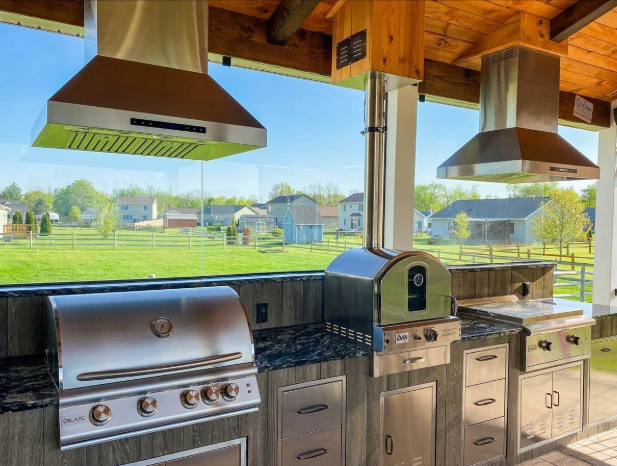
Modern kitchens continue evolving toward more open layouts, cleaner aesthetics, and multifunctional spaces. As kitchen islands become increasingly common in residential design, homeowners are paying greater attention to ventilation systems that support both functionality and visual appeal. Proper kitchen ventilation plays an important role in improving indoor air quality by helping remove smoke, steam, grease particles, and cooking odors from the home environment.
In recent years, many homeowners have started considering ductless island range hoods as a practical solution for kitchens where traditional ducted ventilation systems may not be feasible. These ventilation units are designed to filter and recirculate air without requiring extensive ductwork, making them suitable for a variety of modern kitchen layouts and renovation projects.
Understanding How Ductless Range Hoods Work
Unlike ducted systems that vent air outside through installed ducts, ductless range hoods use internal filtration systems to clean and recirculate air back into the kitchen. Most systems rely on charcoal or carbon filters combined with grease filters to capture airborne particles, smoke, and odors generated during cooking.
Ductless ventilation systems are commonly used in:
- Apartments and condominiums
- Open-concept kitchens
- Renovation projects
- Kitchens without existing ductwork
- Island cooking layouts
- Multi-story residential spaces
Because kitchen islands are positioned away from walls, installing external duct systems can sometimes become expensive or structurally difficult. This is one reason why ductless island range hoods continue gaining attention in contemporary kitchen design.
Benefits of Modern Kitchen Layouts
Kitchen islands are often designed as central gathering spaces for cooking, dining, and social interaction. Ventilation systems installed above island cooktops must therefore balance both performance and visual integration within the overall kitchen aesthetic.
Ductless island range hoods offer several potential advantages, including:
- Reduced installation complexity
- Greater flexibility in kitchen design
- Cleaner ceiling appearance
- Improved adaptability for remodels
- Easier installation in certain properties
For homeowners working within structural limitations, ductless systems may provide a practical ventilation alternative without requiring major ceiling or wall modifications.
The sleek appearance of many island hoods also aligns with minimalist and contemporary interior design trends that prioritize open visual space.
Indoor Air Quality and Kitchen Ventilation
Cooking activities release heat, grease, moisture, and airborne contaminants into indoor environments. Without proper ventilation, these particles may accumulate on surfaces and affect indoor comfort over time.
Range hoods help improve kitchen air circulation by reducing:
- Smoke buildup
- Cooking odors
- Excess humidity
- Airborne grease particles
- Heat concentration near cooktops
Although ducted systems generally offer stronger ventilation performance, ductless systems continue to improve through advances in filtration technology and airflow efficiency.
Filter maintenance remains important for maintaining effective performance. Many systems require periodic cleaning or replacement of charcoal filters to ensure proper air purification.
Energy Efficiency and Convenience
Energy efficiency has become an important factor in modern appliance selection. Many newer ventilation systems now incorporate LED lighting, variable fan speeds, and quieter motor technology to improve overall efficiency and user comfort.
Some advanced features available in modern range hoods may include:
- Touchscreen controls
- Smart connectivity options
- Adjustable fan settings
- Energy-efficient lighting
- Low-noise operation
Choosing the Right Ventilation Solution
Selecting the right kitchen ventilation system depends on several factors, including cooking habits, kitchen layout, installation limitations, and long-term maintenance preferences.
Homeowners often evaluate:
- Kitchen size
- Frequency of cooking
- Installation budget
- Ventilation power requirements
- Maintenance expectations
- Interior design preferences
Conclusion
Kitchen ventilation continues playing an important role in maintaining indoor air quality, reducing cooking odors, and supporting comfortable home environments. As open-concept kitchens and island cooking spaces become more common, ductless island range hoods remain a popular option for homeowners seeking flexible and visually modern ventilation solutions. Many homeowners also compare alternative kitchen ventilation systems, such as an under-cabinet hood, when exploring practical airflow solutions for different kitchen layouts and cooking needs.