
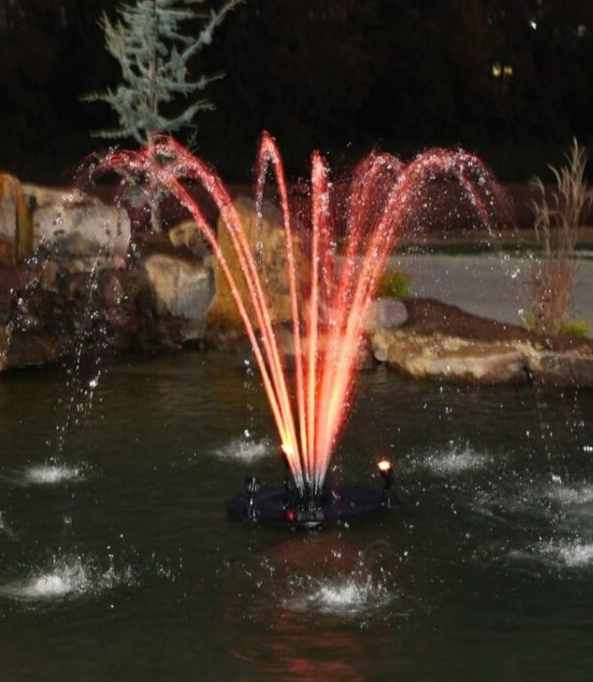
Evening is when a garden water feature earns its place, yet many installations are planned backward, with lights added only after the plumbing is finished. A better approach treats illumination as part of the design from the start. Thoughtful outdoor fountain lighting improves safety, shows off the moving water, and keeps the yard usable after dark.
Start With the Site
Every site has its own conditions, and these shape the lighting plan. Note where people will walk, where the feature is viewed from, and where power is available. A fountain seen mostly from a patio needs lights angled toward that view, while one near a path also needs soft illumination to prevent tripping.
Surroundings matter just as much. Dark stone and liners absorb light, so fixtures must work harder. Light-colored rock reflects more of it, and a tall hedge can block spill. Walk the area at dusk with a flashlight to preview where highlights and shadows will fall.
Layering the Light
Strong outdoor fountain lighting uses more than one layer, so the feature has depth. Three layers cover most gardens:
- Spray lighting: submerged fixtures below the nozzle illuminate the water column.
- Surface and edge lighting: low fixtures highlight rocks, plants, and the pond border.
- Ambient lighting: soft background light on nearby paths or seating.
Submersible LED fixtures work well for the first layer. A small kit often includes three LED fixtures with a combined draw near 6 watts and a long cord, which fits compact water features. Keeping the ambient layer dimmer than the spray ensures the water stays the focal point.
Power Planning With the Pump
Lights and pumps share a power source, so planning both avoids overloaded circuits. A pump is the heavier load. A half-horsepower motor equals roughly 373 watts of mechanical output, and the electrical draw is higher once efficiency losses are included. Lighting is tiny by comparison, since LED fixtures draw only 1 to 10 watts each in many accent designs.
Because of that difference, lighting can usually share the existing circuit, but the total should stay within the circuit rating. Low-voltage fixtures need a transformer, and a common guideline is to size it with about 20 percent spare capacity. Connect both pump and transformer to a GFCI-protected outlet, and disconnect power before servicing either one. Strong outdoor fountain lighting also depends on a stable supply, since voltage drops over long cable runs make distant fixtures dim.
Weather and Durability
Outdoor equipment faces rain, sun, frost, and debris. Fixtures designed for constant submersion should have an IP68 rating, which covers continuous immersion. Housings of stainless steel or sturdy plastic resist corrosion, and good seals keep moisture away from the electronics.
Cold climates add another concern. Water can freeze around fixtures and damage cables or lenses. Many owners remove lights from the water before hard freezes and store them indoors, but the manufacturer’s guidance should decide that. In hot regions, direct sun can fade cables over time, so routing them under stone or mulch extends their life.
Reducing Glare and Light Pollution
Excess brightness harms more than it helps. Aim fixtures so beams point at the water instead of toward neighbors’ windows or into the eyes of viewers. Shielded or low-profile fixtures help, and warm white light in the 2700K to 3000K range keeps the glow gentle. Timers or photocells limit run hours, which respects wildlife and saves energy.
For ponds with fish, keep intensity modest and give the animals a long dark period each night. Frogs, insects, and birds also respond to artificial light, so a shutoff timer is a sensible habit.
Maintenance Through the Seasons
A little routine care prevents most failures. Clean lenses every few weeks to remove algae and mineral film. Check cables for cracks or chewing damage, and inspect waterproof connections each spring. Test the timer after power outages, since resets can leave lights running all day.
At season’s end, drain and store removable components, and leave the pump and lighting wiring free of debris. LED fixtures are rated for tens of thousands of hours, so most problems come from seals and cables instead of the light source.
Conclusion
A well-planned setup balances the site, the layers of light, power capacity, and weather protection. Fixtures that are easy to clean and safely wired will keep working for many seasons. Gardeners who combine soft lighting with a reliable 1/2 HP pond fountain get a lively spray that glows at night without wasting energy. Good planning at the start makes the finished garden easier to enjoy.