
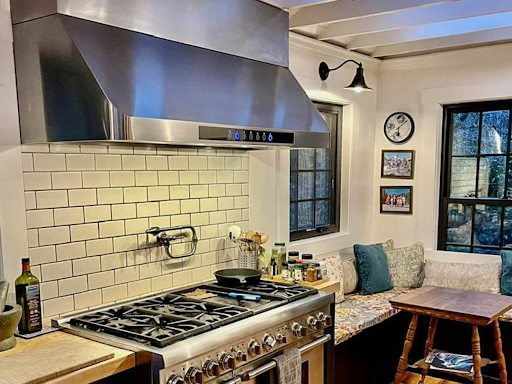
An under cabinet kitchen vent hood is one of the most widely used kitchen ventilation systems because it maximizes cabinet space while delivering efficient smoke, grease, heat, and odor removal. Installed directly beneath overhead cabinets, these range hoods are designed to provide effective airflow without occupying additional wall space. Selecting the right model involves evaluating airflow capacity (CFM), duct configuration, filtration system, installation dimensions, and blower performance.
Modern under-cabinet kitchen vent hood models are available in ducted, ductless, and convertible configurations with multiple blower capacities ranging from approximately 600 to 2000 CFM. Premium units also feature stainless steel construction, dishwasher-safe baffle filters, LED lighting, and quiet motor technology for long-term residential use.
Airflow (CFM) Requirements
The performance of an under-cabinet kitchen vent hood depends largely on its airflow rating.
Typical CFM recommendations include:
- 600 CFM for everyday residential cooking
- 900–1200 CFM for gas ranges
- 1200–2000 CFM for professional-style cooking appliances
- Higher airflow for grilling, searing, and wok cooking
Selecting the proper CFM ensures efficient removal of smoke and airborne grease while maintaining good indoor air quality.
Ducted vs. Ductless Installation
The ventilation method directly affects overall performance.
Ducted Systems
- Exhaust cooking by-products outdoors
- Provide maximum ventilation efficiency
- Require exterior ductwork
- Best for frequent or high-heat cooking
Ductless (Recirculating) Systems
- Filter air through activated charcoal filters
- Return cleaned air back into the kitchen
- Suitable where exterior venting is unavailable
- Require periodic charcoal filter replacement
Many modern under-cabinet models are convertible, allowing installation as either ducted or ductless systems.
Filter Systems
High-quality under-cabinet kitchen vent hood units generally utilize:
- Stainless steel baffle filters
- Aluminum mesh filters
- Charcoal filters for recirculating installations
Baffle filters are preferred for high-performance residential kitchens because they efficiently separate grease while maintaining unrestricted airflow.
Construction Materials
Premium ventilation systems commonly feature:
- 304 stainless steel
- 430 stainless steel
- Heavy-duty blower housings
- Heat-resistant control panels
Stainless steel construction improves durability, corrosion resistance, and simplifies routine cleaning.
Installation Considerations
Proper installation helps maximize ventilation performance.
Important factors include:
- Matching hood width to cooktop size
- Recommended mounting height above the cooking surface
- Correct duct diameter
- Minimal duct bends
- Proper electrical connections
- Compliance with local building codes
Correct installation improves airflow while reducing operational noise.
Routine Maintenance
Regular maintenance preserves the efficiency of an under-cabinet kitchen vent hood.
Recommended maintenance includes:
- Cleaning grease filters regularly
- Replacing charcoal filters when required
- Wiping stainless steel surfaces
- Inspecting blower performance
- Checking ductwork for obstructions
Routine servicing extends equipment lifespan and maintains optimal ventilation efficiency.
Performance Applications
An under-cabinet kitchen vent hood is suitable for:
- Standard residential kitchens
- Apartments and condominiums
- Kitchen remodels
- Custom cabinetry installations
- Professional-style home kitchens
Available in multiple widths and airflow capacities, these systems can accommodate a wide range of cooking environments.
Conclusion
A wall-mounted ductless range hood may be appropriate for kitchens requiring an alternative mounting configuration, but an under-cabinet kitchen vent hood remains one of the most efficient space-saving ventilation solutions. Choosing the correct CFM rating, filtration system, duct configuration, and installation method ensures reliable performance, cleaner indoor air, and long-term ventilation efficiency.