
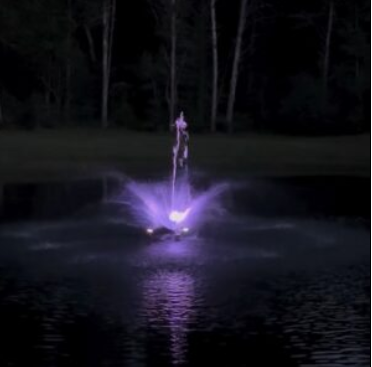
A pond fountain can become a striking focal point during the day, but the display does not have to disappear after sunset. Adding water fountain LED lights can illuminate the spray, highlight moving water, and create a more visible feature for outdoor spaces after dark.
Modern pond fountain lighting is designed to work alongside fountain systems rather than simply illuminating the surrounding landscape. Depending on the equipment, lighting may be available in white or color-changing configurations, allowing property owners to create different visual effects.
For anyone planning an illuminated pond, however, lighting should be considered alongside fountain size, water depth, electrical requirements, spray pattern, and maintenance. A visually appealing installation also needs to be appropriately matched to the pond and fountain equipment.
How LED Lighting Changes a Pond Fountain at Night
Water naturally reflects and refracts light, which makes a fountain particularly suitable for nighttime illumination. Lights positioned around or beneath the fountain can catch the moving spray and create a more defined display.
LED technology is commonly used for this purpose because it can provide bright illumination with relatively low power consumption. Friendly Fountains, for example, offers fountain lighting kits using three 12-volt, 6-watt LED lights, with options for white or color-changing illumination.
The visual result depends on more than the lights themselves. Spray height, nozzle configuration, water clarity, surrounding darkness, and fixture positioning can all affect how the illuminated fountain appears.
White vs. Color-Changing Fountain Lights
One of the first decisions when choosing water fountain LED lights is whether to use a fixed white light or a color-changing system.
White Lighting
White LEDs can provide a more understated appearance and emphasize the natural movement of water. They can work particularly well for ponds where the goal is architectural or landscape illumination rather than a highly decorative display.
Color-Changing Lighting
Color-changing LEDs provide greater flexibility for special occasions, seasonal displays, or changing landscape designs. Different colors can make the same fountain appear noticeably different without changing the physical fountain equipment.
Friendly Fountains currently lists both white and color-changing options for its lighted floating fountains.
Neither approach is universally appropriate. The choice largely depends on the property’s surroundings and the desired visual character.
Matching Lighting to Fountain Size
Lighting should be compatible with the fountain itself. A small fountain may require a different lighting arrangement from a larger system with a taller spray pattern.
For example, Friendly Fountains’ lighted 1/3 HP system uses a 4,000 GPH pump, a floating base, five interchangeable spray nozzles, and a three-light LED setup. The system requires at least 36 inches of water depth and operates on 110/120V power, while the lighting operates at 12V.
The lighting is therefore part of a larger fountain system rather than an isolated decorative component.
Understanding the 1/3 HP Pond Fountain
A 1 3 HP pond fountain can be suitable for smaller to mid-sized ponds when its flow rate and installation requirements match the water feature.
Friendly Fountains lists its 1/3 HP fountain at 4,000 gallons per hour and offers both unlit and lighted versions. The lighted configuration includes five interchangeable spray patterns and three LED lights.
The five nozzle options provide different spray shapes, including patterns described by the manufacturer as Tulip, Gusher, Classic V, Wide V, and Trumpet. These variations can change how the lighting interacts with the water.
This is an important consideration when designing an illuminated fountain because the same lights can produce different visual effects depending on the spray pattern.
Why Fountain Flow Rate Matters
Gallons per hour, or GPH, indicates the amount of water the pump can move under the manufacturer’s specified conditions. It is one of the factors used when determining whether a fountain is appropriate for a particular pond.
Friendly Fountains currently lists its floating fountains in 1/3 HP, 1/2 HP, and 3/4 HP configurations, with corresponding flow rates of approximately 4,000, 5,300, and 6,600 GPH.
Pond dimensions, depth, desired spray height, wind exposure, and intended aeration all need to be considered when selecting a fountain. The company’s pond calculator similarly notes that fountain sizing depends on pond size, depth, desired aeration, and spray characteristics.
Lighting Is More Than Decoration
Illuminated fountains can contribute to the visual definition of a pond after dark. This can be particularly useful around properties where people regularly gather outdoors in the evening.
Friendly Fountains notes that illuminated fountains can help define pond boundaries for visitors and residents while also creating a nighttime visual feature.
However, lighting should not be treated as a substitute for appropriate safety measures around water. People should follow the manufacturer’s operating instructions and avoid swimming while a fountain is operating.
Electrical Considerations
Because pond fountains combine water and electricity, electrical installation deserves particular attention.
Friendly Fountains specifies that its 1/3 HP lighted fountain operates from a 110/120V supply and should be connected to a GFCI-protected outlet. The LED lighting itself uses a low-voltage 12V system.
The distinction between the fountain’s operating voltage and the lighting voltage is important. Homeowners should follow the manufacturer’s installation instructions rather than attempting to modify electrical connections themselves.
Outdoor electrical equipment should also be appropriately protected from moisture and installed according to applicable electrical requirements.
Maintaining an Illuminated Fountain
Regular maintenance helps keep both the fountain and its lighting functioning properly.
Debris can restrict water flow, affect the pump, or interfere with the appearance of the spray. Friendly Fountains recommends checking the filter basket approximately every quarter and flushing the pump with clean water during routine maintenance. Its guidance also recommends cleaning fountain pumps approximately every four to six weeks during active use.
The lighting fixtures should also be inspected periodically for damage, buildup, loose connections, or changes in illumination.
Seasonal Considerations
Climate can affect fountain maintenance. In regions where ponds may freeze, floating fountain equipment generally needs to be removed before freezing conditions occur.
Friendly Fountains specifically advises removing its fountain before the pond freezes rather than leaving the equipment installed during freezing weather.
Even in warmer climates, seasonal inspection can be useful. Changes in water level, debris accumulation, algae, storms, and electrical connections can all affect fountain operation.
Choosing the Right Spray Pattern
The spray pattern can have a major influence on the final appearance of water fountain LED lights.
A narrow spray can concentrate illumination in a relatively compact area, while a wider pattern can spread illuminated water across a larger section of the pond. Different nozzle shapes can also produce different reflections and movement.
Friendly Fountains includes five interchangeable nozzles with its 1/3 HP lighted fountain, allowing users to change the appearance of the spray without replacing the entire fountain system.
This flexibility can be useful when experimenting with how the fountain interacts with the surrounding landscape.
Planning an Illuminated Pond Feature
Before installing a fountain and lighting system, consider:
- Pond surface area and depth
- Desired fountain height
- Required water circulation
- Available electrical supply
- GFCI protection
- Lighting color
- Spray pattern
- Fountain placement
- Wind exposure
- Maintenance access
- Seasonal weather conditions
- Distance from pedestrian areas
A properly planned system can balance visual impact with practical operating requirements.
Conclusion
Water fountain LED lights can transform a pond fountain into a visible nighttime centerpiece while highlighting the movement and shape of the water. White lighting can create a restrained appearance, while color-changing LEDs offer greater flexibility for events and seasonal displays. A compatible fountain system is equally important. A 1 3 HP pond fountain, for example, can provide a 4,000 GPH water display when the pond’s size, depth, and desired spray characteristics are appropriate. By considering pump capacity, spray patterns, lighting configuration, electrical safety, maintenance, and seasonal conditions together, property owners can create an illuminated water feature that remains attractive and functional after sunset.