
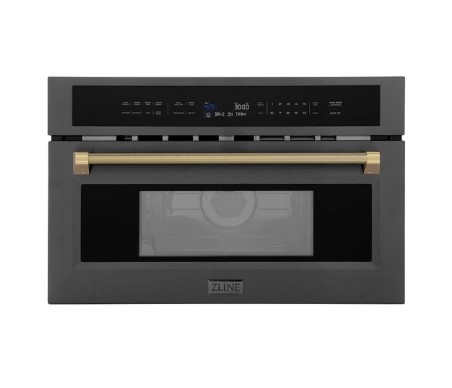
Planning a kitchen around multiple appliances can become complicated quickly. Ranges, refrigerators, dishwashers, microwaves, and ventilation systems all need to work together in terms of dimensions, electrical or gas requirements, ventilation, workflow, and visual consistency. This is why many homeowners consider Zline appliance packages when designing or renovating a kitchen, since coordinated appliance groups can simplify the process of matching finishes and styles.
However, buying a package should never be based on appearance alone. A well-planned kitchen depends on how each appliance fits the available space, how it supports everyday cooking habits, and whether the installation requirements suit the home. Reviewing the following factors can help homeowners make a more informed decision.
Start With the Kitchen Layout
Before comparing Zline appliance packages, begin with the physical layout of the kitchen.
Measure the spaces intended for the range, refrigerator, dishwasher, microwave, and any ventilation equipment. Include width, height, and depth, and remember that doors and drawers need enough clearance to open fully.
Walkways are equally important. An oversized refrigerator door or dishwasher positioned in a narrow aisle can interrupt movement through the kitchen.
A coordinated package may look attractive on paper, but each appliance still needs to work within the actual room dimensions.
Decide Which Appliances You Really Need
Not every kitchen requires the same combination of appliances.
Some households may need a range, refrigerator, dishwasher, and microwave, while others might prioritise a separate cooktop and wall oven. A serious home cook may place greater value on cooking power and ventilation, while another household may need more refrigeration capacity.
When evaluating Zline appliance packages, consider how often each appliance will be used and whether every included item adds practical value.
Buying unnecessary equipment simply because it is part of a larger set can increase both purchase and installation costs without improving the kitchen.
Match the Range to Your Cooking Habits
The range is often one of the most heavily used appliances in a kitchen.
Consider the number of burners, oven capacity, fuel type, cooking style, and physical width. Gas, electric, induction, and dual-fuel configurations each have different installation requirements and operating characteristics.
A wider range can provide greater cooking capacity but also requires more cabinet space and appropriately sized ventilation.
Homeowners comparing Zline appliance packages should therefore select the cooking appliance first if it is the central feature of the design. The surrounding cabinetry and ventilation can then be planned around its requirements.
Ventilation Should Be Planned at the Same Time
Range ventilation is not an accessory that should be considered after the kitchen is already designed.
Cooking can produce heat, grease, steam, smoke, and odours. A properly selected range hood helps remove or filter these by-products.
Ventilation requirements depend on factors such as cooking equipment, range width, hood dimensions, duct configuration, and airflow capacity.
A hood should also be positioned according to the manufacturer’s specified mounting height. Installing it too high may reduce effectiveness, while placing it too low can create clearance and safety problems.
With Zline appliance packages, matching the hood aesthetically is useful, but airflow and installation compatibility should remain the priority.
Check Refrigerator Dimensions Carefully
Refrigerators can be deceptively difficult to fit.
Nominal width does not always reflect the total space needed. Door hinges, handles, ventilation clearances, and door swing all influence installation.
Counter-depth models can create a more integrated appearance because they project less beyond surrounding cabinetry, while full-depth refrigerators generally provide more internal storage.
Before choosing a refrigerator as part of Zline appliance packages, homeowners should check both exterior dimensions and usable interior capacity.
It is also useful to consider whether nearby walls or cabinets could prevent doors or drawers from opening completely.
Make Sure the Dishwasher Fits the Workflow
Dishwasher placement affects how efficiently the kitchen functions.
It is usually most convenient near the sink because plumbing connections are simpler and dirty dishes can be transferred easily. However, the open dishwasher door should not completely block the main walkway or prevent access to nearby cabinets.
Interior layout also matters. Adjustable racks, utensil storage, cycle options, and capacity can influence everyday usability.
When assessing Zline appliance packages, compare dishwasher features based on actual household needs rather than assuming that visual coordination guarantees the best functional choice.
Coordinate Finishes Without Overlooking Maintenance
Matching finishes can make a kitchen feel more deliberate.
Stainless steel is widely used because it works with many cabinet styles and colour schemes. Other options may include black, white, coloured doors, or mixed-metal accents.
However, finishes should also be evaluated for maintenance. Glossy and polished surfaces may show fingerprints more easily, while darker finishes can reveal dust or water marks.
Homeowners choosing Zline appliance packages should consider how the appliances will look after regular use, not only when freshly installed.
A coordinated kitchen should be practical to clean as well as visually consistent.
Check Electrical and Gas Requirements Early
Major kitchen appliances can have very different utility requirements.
Electric ranges, induction units, refrigerators, dishwashers, wall ovens, microwaves, and ventilation systems may each require dedicated circuits or particular electrical specifications.
Gas appliances may require suitable connections and professional installation. Dual-fuel configurations can need both gas and higher-capacity electrical service.
These requirements should be checked before cabinetry and flooring are completed.
Choosing Zline appliance packages without confirming utility compatibility can result in unexpected rewiring, gas work, or additional installation expenses.
Think About Appliance Clearances
Appliances need space around them for safe operation, airflow, and access.
Refrigerators often require ventilation clearances. Ranges may have specific requirements relating to combustible materials and surrounding cabinetry. Dishwashers need enough room for door operation, while microwaves and hoods require appropriate height above cooking surfaces.
Manufacturer installation documents should be treated as the primary reference.
Even appliances advertised under the same coordinated collection can have different clearance requirements, so each specification sheet should be reviewed separately.
Evaluate Cleaning and Maintenance Features
Kitchen appliances are exposed to grease, food spills, steam, fingerprints, and repeated handling.
Features that simplify maintenance can therefore provide considerable long-term value.
Look for removable burner components, accessible filters, easy-clean oven interiors, dishwasher filtration systems, and refrigerator shelving that can be removed without difficulty.
The most practical Zline appliance packages are not necessarily those with the longest feature lists. They are the ones whose day-to-day maintenance fits the household’s lifestyle.
Consider Repair Access and Long-Term Ownership
Appliances are long-term household purchases, so serviceability deserves attention.
Before committing to a package, research warranty terms, replacement-part availability, service coverage, and the process for arranging repairs.
It can also be useful to understand whether common components are easily accessible to technicians.
A coordinated kitchen looks best when all appliances function reliably, but long-term value depends on maintenance and service just as much as appearance.
Plan the Budget Beyond the Purchase Price
The total kitchen appliance budget should include more than the advertised product cost.
Potential additional expenses include:
- Delivery
- Installation
- Electrical work
- Gas connections
- Ventilation ducting
- Cabinet modifications
- Disposal of old appliances
- Plumbing adjustments
- Accessories and trim kits
When comparing Zline appliance packages, calculate the complete installed cost rather than focusing only on the initial package price.
This creates a more accurate picture of the overall renovation budget.
Conclusion
Coordinated appliances can simplify kitchen design, but they still require careful planning. The most successful Zline appliance packages are those selected around the kitchen’s dimensions, cooking habits, ventilation needs, utility connections, maintenance expectations, and long-term service requirements. When comparing Zline kitchen appliance packages, homeowners should treat visual consistency as one factor among many and verify the specifications of every range, refrigerator, dishwasher, microwave, and hood individually. A coordinated kitchen works best when form and function are considered together. Accurate measurements, early utility planning, realistic budgeting, and careful review of installation requirements can help create an appliance setup that looks cohesive while remaining practical for everyday use.