
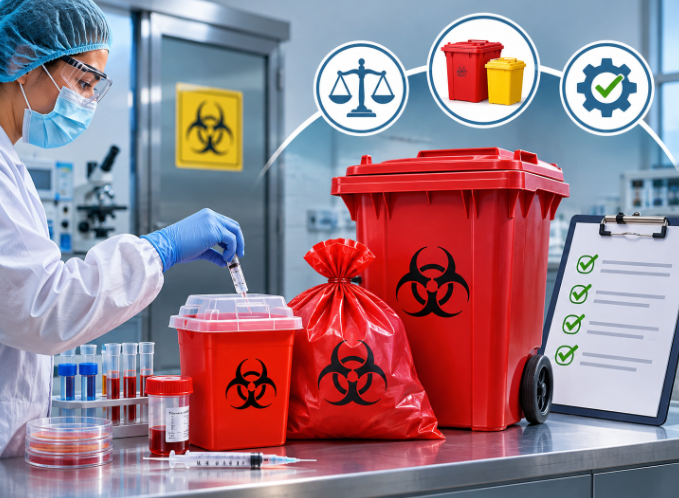
Anything contaminated with blood or other infectious material needs to be handled differently from ordinary trash. The rules protect staff, waste handlers, and the public from infection. This guide explains how biohazard waste disposal works, what OSHA requires, and how to set up a safe system in a clinic or office.
What Counts as Biohazard Waste
OSHA’s Bloodborne Pathogens Standard defines regulated waste as including:
- Liquid or semi-liquid blood or other potentially infectious materials
- Items that would release blood or such materials if compressed
- Items caked with dried blood that could flake off during handling
- Contaminated sharps
- Pathological and microbiological wastes containing blood or infectious materials
Examples include saturated gauze, used needles, scalpel blades, cultures, and certain lab materials. Items that are only lightly stained usually do not meet the definition, though state rules vary.
Containers and Labels
Containers are the backbone of biohazard waste disposal.
The right container depends on the type of waste.
Sharps
Contaminated sharps go into containers that are closable, puncture-resistant, leakproof on the sides and bottom, and labeled or color-coded. They must be kept upright, easily accessible near the point of use, and replaced before they overfill. A common guideline is to replace a container at its fill line or when it is about three-quarters full.
Other Regulated Waste
Non-sharp regulated waste goes into closable, leakproof containers that are labeled or color-coded. Red bags or red containers can substitute for labels. If the outside of a container is contaminated, place it in a second container that meets the same requirements.
Labels
Biohazard labels use a fluorescent orange or orange-red background with the biohazard symbol and the word BIOHAZARD in a contrasting color. Proper labeling tells everyone who handles the container what is inside.
Setting Up Your System
- Identify where biohazard waste is generated
- Place sharps containers close to the point of use
- Provide red bags in treatment areas
- Post clear signs showing what goes where
- Train staff before they handle any waste
- Designate a locked storage area
- Arrange regular collection by a licensed provider
Good biohazard waste disposal begins at the point of origin. Making the right choice easy reduces mistakes.
Safe Handling Practices
Daily habits determine how safe biohazard waste disposal really is.
- Never recap needles by hand
- Place sharps in a container immediately after use
- Do not reach into containers or compress them
- Tie red bags securely, such as with a gooseneck knot
- Close sharps containers fully before moving them
- Use rigid, leakproof carts for internal transport
- Wear appropriate personal protective equipment
Clean and disinfect areas after spills according to your exposure control plan. Report needlestick injuries immediately.
Storage Requirements
Store waste in a designated area that is separate from clean supplies, clearly marked with biohazard signs, and locked or access-controlled. The area should be ventilated, kept cool, and cleaned regularly. Avoid stacking waste in hallways or storerooms.
Limit how long waste sits on site. States set different time limits, and long storage raises odor, leakage, and security concerns.
Treatment and Final Disposal
The final stage of biohazard waste disposal happens at a permitted facility.
After collection, regulated waste is treated to make it safe. Common methods include autoclaving, which uses steam under pressure, and incineration, which destroys waste at high temperatures. Sharps are often treated and then sent to a permitted landfill or incinerator.
Treatment methods and tracking requirements vary by state. Some states require detailed manifests for every shipment. Check with your state environmental and health agencies.
Training and Records
OSHA requires employers to have a written exposure control plan, provide training, offer hepatitis B vaccination to at-risk employees, and keep records. Training should cover how to identify biohazard waste, use containers, respond to spills, and report injuries.
Choosing a Disposal Provider
Provider choice shapes the reliability of your biohazard waste disposal.
- Licensed and permitted for your waste types and state
- Clear scheduling, including emergency pickup if needed
- Supplies such as sharps containers and red bags
- Documentation for every pickup
- Transparent pricing without hidden fees
- Strong safety and training records
Ask where the waste is treated and request documents showing it was destroyed. A reliable provider welcomes the question.
Conclusion
A safe program combines the right containers, trained staff, secure storage, and a licensed provider. Clinics, dental offices, and laboratories that generate needles should schedule regular sharps pickup and review container use each month. Revisit the program whenever services, staffing, or volumes change.