
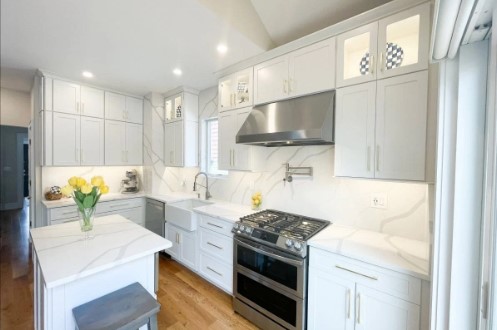
Not every kitchen has a path for ductwork. Apartments, condos, interior walls, and tight cabinetry can make venting to the outdoors difficult or impossible. Limited airflow can allow grease particles, cooking odors, smoke, and excess moisture to linger in the kitchen, making effective ventilation an important consideration. In those situations, ductless under-cabinet range hoods offer a practical alternative, cleaning cooking air through filters and returning it to the room. This article explains how they work, what features matter, how to size them, and how to keep them performing well over time.
How Recirculating Hoods Work
Instead of sending air outside through a duct, a recirculating hood pulls smoke, grease, and odors upward and passes them through charcoal or carbon filters. The filters trap contaminants before the cleaned air returns to the kitchen. Because the air stays indoors, these hoods also help keep heated or cooled air inside the home, which can reduce energy loss compared with ducted systems. Many hoods are sold as convertible, meaning they can operate in ducted mode or switch to recirculating mode with an optional charcoal filter accessory.
Airflow, Motors, and Noise
Airflow is measured in CFM, and ductless models are commonly available from about 600 CFM up to 1000 CFM or more, so you can match the hood to everyday meals or heavier frying and grilling. Higher CFM moves more air per minute for stronger smoke and odor control. Some models use a single motor, which offers streamlined, energy-efficient ventilation, while others use dual motors for more powerful, evenly distributed airflow. Noise matters too. Many hoods in this category run at around 7 sones, which keeps conversation comfortable in open-concept kitchens. When comparing ductless under-cabinet range hoods, look at CFM, motor type, and sone rating together.
Choosing the Right Width
Under-cabinet hoods typically come in widths from 30 inches up to 60 inches, with many models also offered at 36, 42, 48, and 54 inches. A larger hood captures more of a big cooktop’s output, while a compact one suits a small stove. Measure the cooktop and the cabinet opening first, and leave enough clearance above the burners according to the manufacturer’s instructions.
Controls, Lighting, and Materials
Modern hoods include push-button or LCD touch controls that adjust fan speed, lighting, and timer settings, and clear displays make operation simple. Energy-efficient LED lighting illuminates the cooktop while using little power. Stainless steel construction is common because it resists wear and wipes clean easily. Together, these features make daily use more convenient and help the hood blend with modern appliances.
Filter Care and Replacement
Filters are the heart of a recirculating system, so their condition determines performance. Charcoal filters should typically be replaced every three to six months, or after roughly 30 hours of cooking, depending on how often and how heavily you cook. Larger, higher-quality carbon filters trap more odors and contaminants, which makes the hood more effective overall. Set a reminder so replacement does not slip, and clean any washable grease filters regularly with warm soapy water.
Codes and Installation Considerations
Recirculating hoods are generally permitted, but local building codes vary, so confirm requirements before installing, especially in apartments and condos. Because ductless under-cabinet range hoods do not need ductwork, installation is often simpler, and they work well where outside venting is not an option. Still, check the mounting height, electrical access, and weight support in your cabinetry, and consider professional help if you are unsure.
Final Thoughts
A recirculating hood can deliver quiet, convenient ventilation when ductwork is not available, provided you pick the right airflow, size, and filters and keep them fresh. Take time to compare specifications, check local requirements, and plan for ongoing filter replacement. For side-by-side comparisons of specific models, a resource such as ductless range hood reviews and buyer’s guide can help narrow the choices. With the right choice, your kitchen stays comfortable, cleaner, and easier to enjoy for years.