
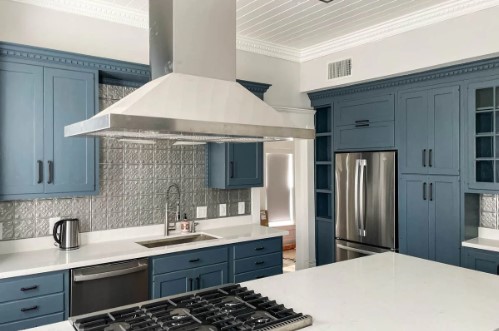
Kitchen ventilation plays an important role in managing smoke, steam, grease, odors, and airborne cooking particles. Choosing the right hood requires considering the size of the cooking surface, kitchen layout, ventilation method, and installation requirements. For compact cooking areas, a 24-inch kitchen hood can provide a practical balance between ventilation coverage and available space.
Match the Hood to Your Cooking Surface
The first consideration is the size of the cooking appliance. A range hood should provide appropriate coverage over the burners or cooking surface so that rising smoke and heat can be captured effectively.
A 24-inch hood is generally suited to appropriately sized compact ranges or cooktops. Before purchasing, measure the cooking surface carefully rather than assuming that the hood dimensions will automatically match the appliance.
Cooking habits also matter. Someone who regularly prepares foods that produce substantial smoke, steam, or grease may have different ventilation requirements from someone who mainly prepares lighter meals.
Consider the Kitchen Layout
Available space can strongly influence hood selection. Smaller kitchens may have limited room between cabinets, walls, or other appliances, making a compact hood a practical option.
When considering a 24-inch kitchen hood, measure the available installation area, including the width, depth, and height. Check surrounding cabinets and determine whether doors or other fixtures could interfere with installation or operation.
The hood should also be positioned at an appropriate height above the cooking surface. Manufacturer instructions should always take priority because recommended clearances can vary depending on the appliance and installation configuration.
Choose Between Venting Options
Kitchen hoods generally use either ducted or recirculating ventilation. A ducted configuration moves air through a ventilation duct and exhausts it outside the home. This can be effective for removing cooking pollutants from the kitchen.
Recirculating configurations filter the air before returning it to the room. They can be useful where exterior ductwork is impractical, although filter maintenance becomes particularly important.
When planning a new installation, homeowners should determine whether an existing duct route can be used or whether new ductwork will be necessary.
Think About Your Cooking Habits
Ventilation requirements vary according to cooking style. Frequent frying, grilling, searing, or high-heat cooking can produce more grease, smoke, and heat than occasional low-temperature cooking.
A 24-inch kitchen hood should therefore be evaluated alongside the type of cooking being performed. Check the hood’s airflow specifications and consider whether its performance is appropriate for the cooking appliance and habits.
Noise can also be a consideration. Some homeowners may prefer quieter operation, particularly in open-plan kitchens where the cooking area connects directly to dining or living spaces.
Check Installation Requirements
Before installation, review the manufacturer’s specifications carefully. Important details may include required clearances, electrical requirements, duct dimensions, mounting methods, and compatible ventilation configurations.
The wall or cabinet supporting the hood should also be capable of handling the equipment securely. If ductwork needs to pass through walls or cabinets, its route should be planned before installation begins.
Professional installation may be appropriate when electrical work, structural modifications, or new ductwork are involved.
Consider Maintenance
Regular maintenance helps keep kitchen ventilation functioning properly. Grease filters can accumulate cooking residue over time and should be cleaned or replaced according to the manufacturer’s recommendations.
Exterior surfaces should also be cleaned regularly to prevent grease buildup. For ducted systems, the ventilation path should be kept in suitable condition so air can move efficiently.
A hood that is easy to access and maintain can make routine kitchen care simpler over the long term.
Final Considerations
Selecting kitchen ventilation requires more than choosing a hood based solely on its width. Homeowners researching ventilation configurations can also review 73 Outdoor Kitchen Hood Ideas for additional inspiration when considering different hood layouts and applications.
Cooking habits, appliance dimensions, available space, ventilation method, installation requirements, noise, and maintenance should all be considered before making a decision. A carefully selected 24-inch hood can provide appropriate ventilation for a compact cooking setup while fitting efficiently into the surrounding kitchen design.