
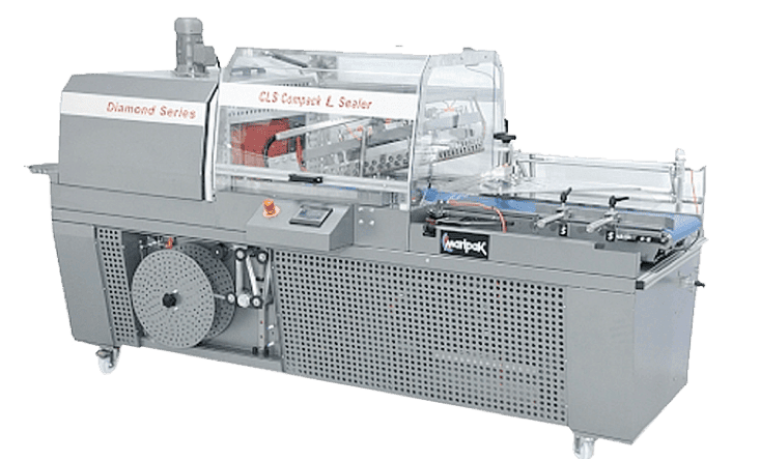
Shrink wrapping is used across many industries to protect products, group items, and create consistent retail or shipping presentations. The process involves enclosing an item in shrink film and applying controlled heat so the material contracts around the product. Although the basic principle is straightforward, selecting suitable equipment requires attention to product dimensions, packaging volume, film type, production speed, and available workspace.
A machine for shrink wrapping should be selected according to the actual packaging task rather than the assumption that one system can handle every product. Understanding the main equipment types and their operating requirements can help businesses avoid unnecessary costs and reduce packaging interruptions.
1. Identify the Products Being Packaged
Start by reviewing the size, shape, weight, and surface characteristics of the products. Small boxes, books, bottles, food containers, and bundled items may require different packaging arrangements.
Measure the longest, widest, and tallest products, including any variations in the range. If products have irregular edges or protruding parts, consider how the film will sit around them. Delicate items may need a packaging method that avoids excessive pressure or heat exposure.
Also consider whether products will be wrapped individually or grouped into multipacks. A system designed for single-item packaging may not provide the best workflow for larger bundles.
2. Choose an Appropriate Equipment Type
Shrink-wrapping systems are available in different configurations. Manual equipment may suit low-volume operations where packaging requirements are limited. Semi-automatic systems reduce some repetitive tasks while still requiring an operator to position products or complete parts of the cycle.
Automatic systems are generally designed for higher production demands. Depending on the configuration, they may integrate product feeding, film application, sealing, and heat-shrinking into a more continuous process.
The right choice depends on the number of packages produced per shift, the amount of labor available, and how consistently products move through the packaging area. A higher level of automation is not automatically better if production volume does not justify the investment.
3. Understand Film Compatibility
Shrink film is available in different materials and thicknesses. Common options include polyolefin, polyethylene, and PVC, although their properties and applications differ.
Polyolefin film is frequently used for retail packaging because it can provide clarity and a relatively neat finish. Polyethylene is often considered for heavier products and multipacks where additional strength may be required. PVC has particular handling and environmental considerations, so its suitability should be reviewed carefully.
Equipment must be compatible with the selected film. Sealing temperature, shrink temperature, film width, and thickness can all affect package quality.
4. Assess Production Speed and Workflow
A machine’s stated output rate is only one part of its performance. Actual throughput depends on product loading, operator movement, sealing time, heat-shrink cycles, and the time needed to remove finished packages.
Map the packaging process from product arrival to finished-case handling. Identify bottlenecks, such as manual loading, film changes, or limited conveyor space. If products arrive in inconsistent batches, a very fast machine may spend time waiting for the next item.
Consider whether the equipment can accommodate expected seasonal increases or future product variations.
5.Review Safety and Workspace Requirements
Heat-based packaging equipment requires suitable operating conditions. Review electrical requirements, ventilation, machine dimensions, access for maintenance, and operator clearance.
Employees should receive training on safe loading, sealing, film handling, and shutdown procedures. Guards and emergency-stop features should be used as directed by the manufacturer. Keep combustible materials and unnecessary objects away from hot components.
The available floor space also matters. Include room for product staging, film storage, finished packages, and routine servicing.
6.Compare Maintenance and Operating Costs
Purchase price does not represent the full cost of ownership. Consider energy use, replacement parts, film consumption, maintenance intervals, and service availability.
Ask how often sealing elements, belts, rollers, or other wear components may require attention. Review the availability of technical support and operator training. A machine that is easy to maintain can reduce avoidable downtime.
Conclusion
Selecting packaging equipment requires a clear understanding of products, film, production volume, operator needs, and long-term costs. For operations that need operator involvement alongside controlled sealing, a semi-automatic L sealer machine may be worth evaluating against the required package sizes and production targets. Comparing these factors before purchase can help create a safer and more consistent packaging process.