
A range hood plays an important role in managing the air around a cooking surface. During cooking, steam, smoke, grease particles, heat, and odors can enter the air, and a properly maintained hood helps manage these airborne byproducts. Over time, however, grease and residue can accumulate on the hood’s exterior, filters, and other accessible components.
For homeowners using a 24 range hood, routine cleaning is an important part of keeping the appliance in good working condition. A clean hood can also make kitchen maintenance easier by preventing layers of grease from becoming increasingly difficult to remove. The cleaning process does not need to be complicated, but it should be performed carefully and according to the manufacturer’s instructions.
Why Regular Range Hood Cleaning Matters
Cooking produces grease-laden vapors that can settle on nearby surfaces. Some of these particles are captured by the hood’s filtration system, while others can accumulate on the hood itself. If residue is allowed to build up, cleaning may become more difficult and the appliance can appear increasingly greasy.
24 range hood maintenance is also connected to kitchen safety. The National Fire Protection Association identifies cooking as the leading cause of reported home fires and home fire injuries in the United States. Keeping the cooking area and associated equipment clean is therefore a sensible part of general kitchen maintenance.
The appropriate cleaning frequency depends on cooking habits. A household that frequently fries foods or prepares meals that generate substantial grease may need to clean its hood more often than a household that mainly boils or bakes food.
Turn Off the Hood Before Cleaning
Safety should come before cleaning any electrical kitchen appliance. Before starting, turn the range hood off and allow it to cool completely if it has recently been operating.
If the manufacturer’s instructions recommend disconnecting power before cleaning, follow that procedure. Avoid spraying cleaning products directly into electrical controls, motors, switches, or other areas where liquid could enter the appliance.
It is also important to use the manufacturer’s cleaning recommendations because different hood surfaces and filters may require different care. Some components may be removable and washable, while others may need replacement rather than cleaning.
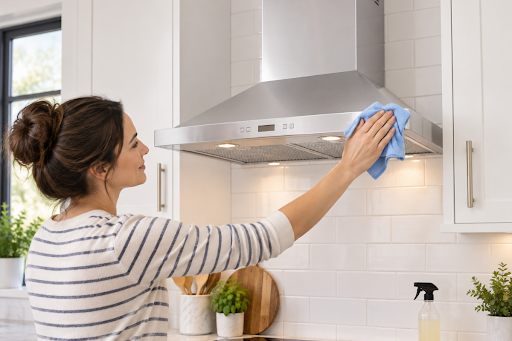
Clean the Exterior Surface First
The exterior is usually the most visible part of a 24 range hood and can collect grease, dust, fingerprints, and cooking residue. Start by removing loose debris with a soft cloth or suitable cleaning material.
A mild cleaning solution can generally be used when compatible with the hood’s surface. Apply the cleaner to the cloth rather than excessively spraying the appliance, particularly around controls and electrical components.
Remove and Clean the Filters
Filters are among the most important components to inspect because they are designed to capture grease and other particles from cooking vapors. The exact filter type varies by hood design, so the manufacturer’s instructions should be checked before removal.
Once removed, washable filters can be cleaned using the method recommended by the manufacturer. Grease-resistant filters may require warm water and an appropriate degreasing solution to loosen accumulated residue.
Clean the Area Around the Hood
Cleaning should not stop at the hood itself. Grease and airborne particles can settle on the underside of cabinets, backsplash surfaces, walls, and nearby areas.
Wiping these surfaces regularly can reduce the amount of residue that eventually reaches the hood. The area immediately above and around the cooking surface can be especially important because it is directly exposed to cooking vapors.
The stovetop should also be kept clean. NFPA recommends keeping the stovetop, burners, and oven clean as part of cooking fire prevention practices.
Inspect the Hood While Cleaning
Cleaning provides a useful opportunity to inspect the appliance for visible problems. Look for damaged filters, loose components, unusual grease accumulation, cracked surfaces, or signs of deterioration.
If the hood makes an unusual noise, has reduced airflow, or shows an electrical problem, cleaning alone may not resolve the issue. Such problems should be addressed using the manufacturer’s troubleshooting guidance or by a qualified professional when appropriate.
For ducted systems, the accessible hood components can be maintained by the homeowner, but deeper exhaust-system cleaning may require professional attention depending on the installation and type of cooking operation.
Avoid Common Cleaning Mistakes
Some cleaning methods can cause unnecessary damage. Abrasive pads may scratch metal surfaces, while harsh chemicals can affect finishes or damage certain components. Excessive water can also create problems if it reaches electrical parts.
Another common mistake is ignoring the manufacturer’s instructions. Cleaning methods that are appropriate for one hood may not be suitable for another. Filter materials, finishes, motors, and control systems can differ substantially between models.
The safest approach is to identify which parts are removable, determine which components are washable, and use only cleaning products and methods that are compatible with the appliance.
How Often Should a Range Hood Be Cleaned?
There is no single cleaning schedule that works for every household. Frequency should reflect how often the cooking surface is used and the types of food prepared.
Light cooking may require less frequent cleaning, while frequent frying, grilling, or cooking with oils can produce more grease and require more regular maintenance. Filters should be inspected periodically rather than waiting until visible buildup becomes heavy.
A simple maintenance routine can include wiping the exterior regularly, inspecting filters, cleaning washable components as recommended, and checking the appliance for visible signs of wear.
Conclusion
A range hood can collect grease and cooking residue over time, making routine cleaning an important part of kitchen maintenance. Proper care involves cleaning accessible surfaces, maintaining filters, inspecting components, and following the manufacturer’s recommendations for specific materials and parts.
For homeowners who want a detailed step-by-step reference, How To Clean An Indoor Range Hood can provide additional guidance on maintaining the appliance and its components. Regular attention is generally easier than allowing heavy buildup to accumulate, while careful cleaning practices can help preserve the appearance and functionality of an indoor range hood.