
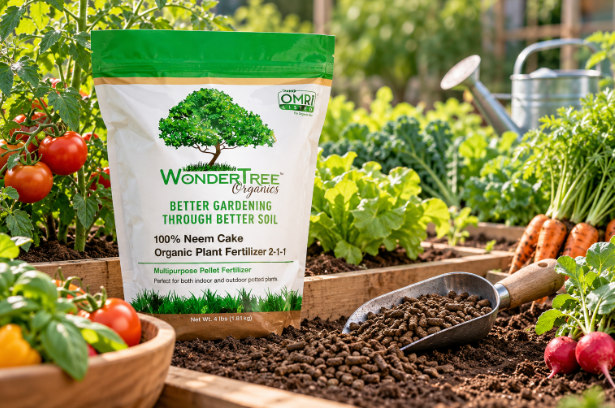
Healthy vegetable gardens depend on fertile soil, balanced nutrition, and consistent care throughout the growing season. While sunlight and watering are essential, plants also need nutrients to develop strong roots, healthy leaves, and productive flowers and fruits. Organic soil amendments can help supply some of these nutrients while supporting soil health over time. Among the options available to gardeners, neem cakes are valued for their organic matter, plant nutrients, and naturally occurring compounds derived from neem seeds.
Neem cake is produced as a by-product of extracting oil from neem seeds. Its composition varies according to the processing method and source, but it can contribute nitrogen and other nutrients as it decomposes. Gardeners may use it alongside compost and other amendments as part of a balanced soil-management plan. Understanding how it works, how to apply it correctly, and what it cannot do is important for achieving healthy vegetable growth without overfertilising the garden.
What Are Neem Cakes?
Neem cake is the solid material remaining after oil is extracted from the seeds of the neem tree, Azadirachta indica. It is commonly available as a coarse powder, granules, or compacted organic material.
The material contains organic matter and varying quantities of nutrients, including nitrogen, phosphorus, and potassium. It may also contain naturally occurring neem compounds, although their concentrations depend on how the seeds were processed.
When incorporated into soil, neem cakes decompose through microbial activity, gradually releasing some of their nutrients. This process means they generally do not behave like highly soluble fertilizers that supply nutrients immediately. The speed of nutrient release depends on soil temperature, moisture, microbial activity, and the product’s composition.
Neem cake has a long history of agricultural use, particularly in India, where it is applied to various crops, including vegetables. Research literature also describes its potential as an organic nutrient source and its role in some soil-pest management practices. However, it should not be treated as a complete solution for every plant nutrition or pest problem.
Benefits of Neem Cakes for Vegetable Gardens
Using organic amendments can help gardeners maintain soil fertility while supporting the long-term needs of vegetable crops. The benefits of neem cake depend on the quality of the material, the soil’s existing nutrient levels, and the way it is applied.
1. Gradual Nutrient Release
As neem cake decomposes, soil microorganisms help release nutrients that plants can absorb. This gradual process can contribute to plant nutrition over time, although the release rate varies with environmental conditions.
2. Support for Soil Organic Matter
Organic materials contribute to soil organic matter, which plays a role in soil structure, water retention, and biological activity. Incorporating suitable organic amendments can help maintain productive garden soil, particularly when combined with compost and other good gardening practices.
3. Potential Support for Soil-Pest Management
Neem contains naturally occurring compounds that have been studied for their effects on certain insects and plant-parasitic nematodes. Neem cake may contribute to soil-pest management in some situations, but its effectiveness varies with the formulation, target pest, application method, and environmental conditions.
It should not be assumed to eliminate pests or replace an integrated pest management program.
4. Compatibility With Organic Gardening
Gardeners interested in organic growing often combine organic amendments with composting, mulching, crop rotation, and careful watering. Neem cakes can form one part of this approach when the product is suitable for the intended crop and used according to its label.
Organic inputs still require responsible application. Applying excessive quantities can create nutrient imbalances, and organic certification or listing claims should always be checked against the specific product documentation.
How to Use Neem Cakes for Growing Vegetables
Correct application is important because nutrient requirements differ among vegetable crops. Tomatoes, leafy greens, beans, cucumbers, and root vegetables do not all require the same nutrient balance throughout their growth cycles.
Follow these general steps when incorporating neem cake into a vegetable garden.
- Assess the soil. A soil test can identify nutrient deficiencies, pH issues, and existing nutrient surpluses. This helps determine whether an additional amendment is needed.
- Read the product label. Application rates vary with concentration, processing method, and formulation. Follow the manufacturer’s instructions rather than using a universal dosage.
- Incorporate it into the soil when appropriate. Where the label permits, mix the recommended amount into the upper soil layer before planting or around established plants without damaging their roots.
- Water the growing area appropriately. Adequate moisture supports microbial activity and nutrient cycling. Avoid waterlogging, which can reduce root health and interfere with normal plant growth.
- Monitor plant development. Observe leaf color, growth rate, flowering, and fruit development. If plants show signs of stress, investigate possible causes instead of automatically adding more nutrients.
For container gardening, be especially cautious with application rates because a pot contains a relatively small volume of growing medium. Excessive amendments can affect nutrient balance and root conditions.
Can Neem Cakes Replace Other Fertilizers?
Neem cake can contribute nutrients, but it should not automatically replace every other nutrient source. Its nutrient composition varies, and it may not provide all the nutrients required by a particular vegetable crop in sufficient quantities.
For example, leafy vegetables often require adequate nitrogen to support leaf development, while fruiting crops also need appropriate phosphorus and potassium availability. These requirements change with plant maturity, soil conditions, and expected production.
The University of Maryland Extension recommends basing vegetable fertilization on soil testing and plant needs. It also warns that excessive fertilizer application can damage roots, encourage unbalanced growth, and contribute to nutrient runoff.
Common Mistakes to Avoid
Several mistakes can reduce the effectiveness of organic soil amendments.
- Applying too much: More material does not necessarily produce healthier plants. Excess nutrients can create imbalances or damage roots.
- Ignoring crop requirements: Different vegetables have different nutritional needs, so one application rate may not suit every planting bed.
- Expecting immediate results: Organic nutrient release depends on decomposition and environmental conditions.
- Neglecting watering and sunlight: Fertility alone cannot compensate for poor drainage, insufficient light, or irregular watering.
- Treating neem cake as a complete pest treatment: Monitor pest activity and use appropriate control methods when necessary.
A consistent approach that combines soil testing, appropriate amendments, crop-specific care, and regular observation is generally more reliable than depending on a single product.
Conclusion
Building a productive vegetable garden starts with understanding the soil and providing plants with the right conditions for healthy growth. Organic amendments can support nutrient cycling and soil structure, but their benefits depend on appropriate application, material quality, and the needs of individual crops. When used as part of a balanced gardening plan, neem cakes can contribute organic matter and gradually available nutrients while potentially supporting certain soil-pest management practices. They work best alongside suitable compost, proper watering, crop rotation, and regular monitoring rather than as a universal replacement for other inputs. By evaluating soil conditions and selecting the right fertilizer for vegetables based on actual crop requirements, gardeners can make informed decisions that support healthy plants and more sustainable growing practices.