
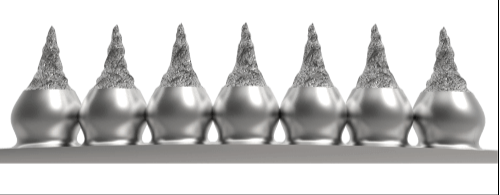
Modern manufacturing relies heavily on precision finishing tools, and among them, the rubber grinding wheel has become an essential component in achieving controlled surface refinement. Known for its elasticity and abrasive strength, this tool is widely used where conventional hard wheels may cause surface damage or inconsistent finishes. A rubber grinding wheel is engineered by bonding abrasive particles within a resilient rubber matrix, allowing it to adapt slightly to surface contours while maintaining cutting efficiency. This unique balance makes it valuable in industries requiring fine tolerance and smooth finishes on metals, composites, and specialized industrial parts.
The development of rubber-based abrasive tools has significantly improved operational accuracy in grinding applications. Unlike rigid grinding systems, the rubber grinding wheel reduces vibration and heat generation, which helps preserve material integrity during high-precision tasks. Its ability to maintain consistent performance under varying pressure conditions has made it a preferred choice in advanced machining environments.
Types of Rubber Grinding Wheel
Rubber grinding wheels are manufactured in several configurations depending on bonding strength, grit composition, and application requirements. Some are designed for soft finishing, while others are reinforced for heavier industrial grinding tasks. The flexibility of the rubber matrix allows engineers to tailor the wheel for specific workloads, ensuring optimal performance in diverse operational conditions.
In specialized tooling environments, an abrasive rubber tool is often developed as a customized variant of a rubber-bonded grinding system. This type of tool is engineered for controlled abrasion in applications that require delicate surface handling. It combines flexibility with precision, making it suitable for finishing intricate parts where traditional grinding wheels may cause damage or uneven wear. The integration of rubber elasticity with abrasive particles ensures stable contact with the workpiece, reducing errors caused by pressure fluctuations and improving consistency in industrial output.
Uses in Precision Finishing
Precision finishing is one of the core applications where rubber-based grinding tools excel. Industries that require ultra-smooth surfaces, such as automotive parts manufacturing and aerospace engineering, rely on the controlled abrasion provided by these wheels. The rubber grinding wheel allows operators to achieve fine surface textures without leaving deep scratches or uneven patterns.
In tool sharpening and mold finishing, consistency is critical. The elastic nature of the wheel ensures uniform contact with the workpiece, reducing errors caused by variations in manual pressure. This makes it particularly useful in environments where repeatability and accuracy are essential for production quality control.
Industrial Applications and Performance Efficiency
The industrial usage of rubber grinding systems spans multiple sectors, including metal fabrication, woodworking machinery maintenance, and precision instrument manufacturing. The rubber grinding wheel is especially valued in high-volume production environments where consistent output quality is required across thousands of components.
In the tire manufacturing and rubber processing industries, a pre-cured tread-cutting tool system plays a crucial role in shaping and preparing rubber materials before the final curing stages. These tools are designed to deliver precise cuts and controlled shaping, ensuring uniformity in tread patterns and improving overall product quality. When combined with rubber-based grinding systems, they help streamline production workflows by enhancing accuracy in material preparation.
Manufacturing and Engineering Advantages
In manufacturing environments, the adaptability of rubber-based grinding systems provides a significant advantage. Engineers often choose the rubber grinding wheel for tasks requiring controlled material removal rates and reduced thermal damage. This is particularly important when working with hardened steels or delicate alloys where overheating can alter material properties.
Additionally, these wheels improve workflow efficiency by minimizing post-processing requirements. The smooth finish achieved often eliminates the need for secondary polishing, saving both time and labor. As industries continue to move toward automation and precision engineering, such tools are becoming increasingly integral to modern production lines.
Conclusion
The versatility and controlled performance of rubber-based abrasive systems make them indispensable in advanced manufacturing. A well-designed rubber grinding wheel enhances precision, reduces operational risks, and supports high-quality finishing across multiple industries. Ultimately, the continued evolution of finishing technology reinforces the importance of the rubber abrasive wheel in achieving superior surface quality and industrial efficiency. Its balanced structure allows it to perform effectively in both delicate and heavy-duty applications, making it a reliable tool in modern engineering environments. With ongoing innovation in materials science, tools such as abrasive rubber tools and pre-cured tread-cutting tools are expanding industrial capabilities even further.