
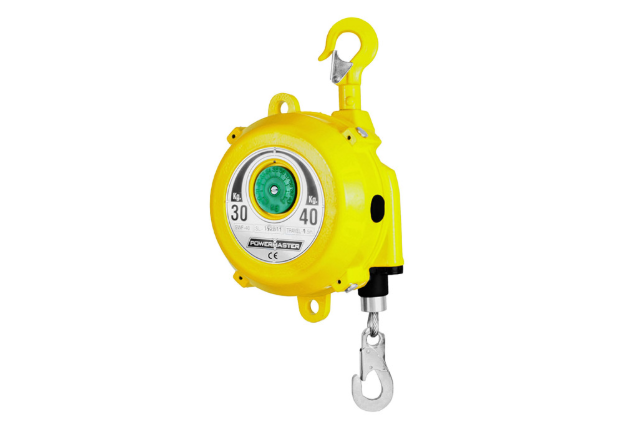
Hand tools are frequently used by workers in industrial settings for many hours each day. Repeatedly using the same tool may strain the hands, wrists, and shoulders. This strain can be minimized with the use of a Tool Balancer, which helps to carry the weight of the tool and to keep it within easy reach.
These devices are commonly used in manufacturing units, workshops, assembly lines, fabrication areas, and maintenance facilities. They can make repetitive work more comfortable while also helping workers handle tools with better control.
What Is a Tool Balancer?
A tool balancer is a device designed to suspend a hand tool above the work area. It uses a spring mechanism to balance the weight of the attached tool. The tool is connected to the balancer using a cable or wire. When the worker pulls the tool down, the spring provides support. Once the tool is released, it moves back towards its suspended position.
This arrangement means the operator does not have to carry the full weight of the tool throughout the task.
How Does It Work?
A typical balancer contains a spring that creates an upward force. This force is adjusted according to the weight of the tool being used. When the operator pulls the tool down, the cable extends from the unit. The spring provides resistance and supports the tool. When the operator lets go, the cable retracts and brings the tool back to its resting position. The balancing force should match the tool’s weight. Choosing the wrong capacity can affect performance and may create a safety risk.
Benefits of Using a Tool Balancer
A Tool Balancer can offer several advantages in an industrial setting.
-
Reduces Physical Strain: Supporting the weight of a tool can reduce pressure on the operator’s arms and shoulders. This is especially useful during repetitive operations.
-
Improves Tool Handling: The tool remains suspended and can be moved easily around the working area. Workers can position it without repeatedly lifting it from a surface.
-
Saves Time: A suspended tool is always close to the operator. There is less need to pick up, place down, or search for tools during repeated tasks.
-
Helps Protect Tools: Tools suspended above the workstation are less likely to fall onto the floor. This can help reduce accidental damage.
-
Supports Better Organisation: Keeping tools in fixed positions can make the workstation more organised and easier to manage.
Applications of Spring Balancers
Spring balancers are used in many industries, including automobile manufacturing, engineering, fabrication, assembly, and general maintenance. They can be used with drills, grinders, screwdrivers, riveting tools, and other hand-operated equipment, depending on the product’s load capacity.
When planning to purchase spring balancers online, buyers should check the weight of the tool, cable length, working range, mounting method, and operating conditions.
Conclusion
A reliable balancer can make repetitive tool handling easier, safer, and more comfortable. Choosing the right capacity and maintaining it properly can improve daily operations. Power Master offers dependable industrial tool balancing solutions designed for demanding workplaces. With quality engineering, practical designs, and a strong industrial focus, Power Master helps businesses improve tool handling, workplace efficiency, and operator comfort.