
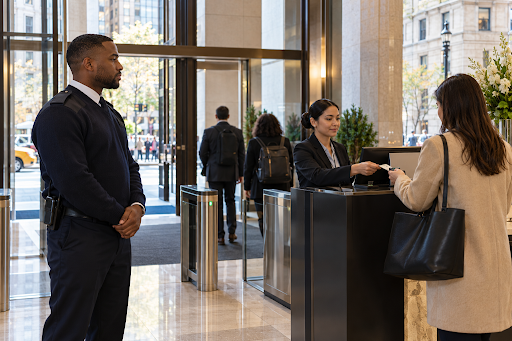
Institutions such as schools, healthcare facilities, corporate offices, and community organisations require a safe and orderly environment to operate effectively. With regular foot traffic, valuable assets, and diverse security needs, these facilities benefit from well-planned security measures that address potential risks without disrupting daily activities. Institutional security in Manhattan involves combining trained security personnel, clear procedures, access management, and proactive monitoring to help protect people and property. Understanding the different elements of institutional security can help organisations develop an approach that reflects their specific environment and responsibilities.
Understanding the Importance of Institutional Security
Institutional facilities often serve large numbers of people throughout the day. Institutional security in Manhattan includes students, employees, and visitors, while healthcare centres accommodate patients, medical staff, and contractors. Office buildings and other organisations may also have multiple entrances, shared spaces, and sensitive areas that require controlled access.
These environments present different security challenges. Unauthorised entry, theft, disruptive behaviour, emergencies, and conflicts can affect normal operations if they are not addressed appropriately. A structured security plan helps institutions identify vulnerabilities, establish consistent procedures, and prepare personnel to respond to incidents.
Effective security is not limited to reacting when a problem occurs. It also involves prevention, observation, communication, and coordination with facility management. By establishing clear protocols and assigning responsibilities, institutions can create an environment where staff, visitors, and occupants understand how security concerns should be handled.
The Role of Professional Security Guards
Security guards can play an important role in maintaining order and providing a visible security presence. Their responsibilities may include monitoring entrances, verifying visitor credentials, conducting authorised patrols, observing unusual activity, and reporting potential safety concerns.
Depending on the facility, guards may also assist with visitor direction, manage access procedures, document incidents, and support emergency response plans. Their duties should be clearly defined so they can perform their responsibilities consistently while respecting the rights and privacy of the people using the premises.
Communication is another essential skill. Institutional security in Manhattan may need to interact with visitors, employees, students, patients, and facility administrators throughout a shift. Professional conduct, situational awareness, and the ability to de-escalate tense situations can help prevent minor concerns from developing into more serious incidents.
When Unarmed Security Guards Are Appropriate
Their presence can help discourage inappropriate behaviour while supporting a welcoming atmosphere for authorised visitors and employees.
Unarmed guards may be suitable for educational facilities, office buildings, residential institutions, reception areas, and other environments where monitoring, communication, and preventive measures are central to the security plan. They can also help enforce established visitor procedures and notify supervisors or emergency services when a situation requires additional assistance.
However, the appropriate security arrangement depends on the facility’s risk assessment. Organisations should consider the nature of their operations, occupancy levels, previous incidents, access points, and emergency requirements before deciding which services are necessary. Unarmed personnel should receive suitable training and have clear procedures for escalating incidents beyond their authority or capabilities.
Developing an Effective Institutional Security Plan
A reliable security programme begins with understanding the specific risks associated with a property. Rather than relying on a standard approach for every facility, administrators should evaluate the building layout, visitor activity, operating hours, and any areas that require additional protection.
Important considerations include:
- Access control: Establish procedures for verifying visitors and restricting entry to authorised areas.
- Visible monitoring: Position security personnel where they can observe entrances and other relevant locations.
- Emergency preparedness: Develop procedures for evacuations, medical emergencies, suspicious activity, and other foreseeable incidents.
- Incident reporting: Maintain accurate records and establish clear communication channels for reporting concerns.
- Staff coordination: Ensure security personnel understand the facility’s policies and know whom to contact when issues arise.
Regular reviews and training can help keep these procedures relevant as institutional needs change.
Choosing an Institutional Security Provider in Manhattan
When evaluating a security provider, organisations should review its experience, personnel training, supervision practices, communication procedures, and ability to adapt services to different institutional settings. It is also important to confirm that the provider and assigned personnel meet applicable licensing and regulatory requirements.
ACE Protection Services offers institutional security services in New York for organisations seeking support with facility safety and security planning. Institutions can evaluate the available services and discuss their operational requirements to determine an appropriate arrangement.
Conclusion
Institutional security requires a balanced approach that combines prevention, trained personnel, clear procedures, and effective communication. For many institutions, unarmed security guards in Manhattan can provide a practical option for access control, observation, customer assistance, and routine security duties. From controlling access to supporting emergency preparedness, each element contributes to a safer and more organised environment. By assessing facility-specific risks and selecting suitable security services, institutions in Manhattan can better protect their occupants, property, and daily operations while maintaining a professional and welcoming atmosphere.