
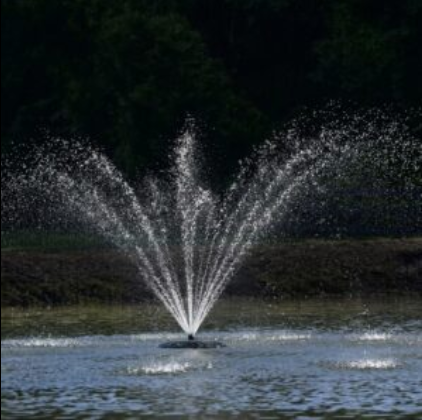
Maintaining a healthy pond requires more than keeping the water clean and visually appealing. Proper circulation, oxygen exchange, and suitable equipment all contribute to a balanced aquatic environment. Choosing the right fountain can help pond owners improve water movement while creating an attractive focal point for outdoor spaces. Understanding how a 3/4 HP pond fountain works can help determine whether this power level is suitable for a particular pond, based on its surface area, depth, aquatic life, and circulation requirements.
Fountains work by drawing water through a pump and releasing it into the air, allowing water to return to the pond after interacting with the atmosphere. This movement supports oxygen exchange near the surface and helps distribute water across the pond. However, fountain performance depends on several factors, and horsepower alone cannot guarantee effective aeration or improved water quality.
What Is a 3/4 HP Pond Fountain?
Horsepower measures the motor’s power output, with three-quarters of a horsepower representing approximately 559 watts of mechanical power. A fountain’s actual electrical consumption may be higher because motors and pumps are not perfectly efficient.
A 3/4 HP pond fountain is a floating or fixed fountain system powered by a three-quarter-horsepower motor. Depending on the pump design, nozzle configuration, and operating conditions, it can deliver substantial water flow and create a range of spray patterns.
This power category may suit certain medium-sized or larger ponds, but the best choice depends on more than pond dimensions. Water depth, desired spray height, fish populations, debris levels, and the amount of circulation required should all be considered before selecting a system.
According to the University of Florida’s guidance on pond aeration, fountains can support oxygen exchange and water mixing, but their effectiveness varies with pond conditions. In deeper ponds, surface fountains may not adequately circulate water near the bottom.
How Does a 3/4 HP Pond Fountain Improve Water Quality?
Water movement is an important part of pond management. When a fountain draws water upward and sprays it into the air, it increases contact between water and the atmosphere, helping oxygen enter the water. The returning spray also creates surface movement that can reduce stagnant areas.
A properly selected 3/4 HP pond fountain can provide several practical benefits:
- Improved surface circulation: Water movement helps distribute oxygen and nutrients through the areas reached by the fountain.
- Support for aquatic life: Adequate dissolved oxygen is essential for fish and other aquatic organisms.
- Reduced stagnation: Consistent circulation can help limit stagnant surface zones, although it does not eliminate every potential mosquito breeding site.
- Potential water-quality improvements: Aeration may support biological processes that break down organic matter, depending on the pond’s nutrient levels and overall conditions.
However, fountains are not a complete solution for every water-quality problem. They cannot independently remove excessive nutrients, eliminate all algae, or replace appropriate pond maintenance. Excessive mixing can also resuspend bottom sediments, making the water appear cloudy. Selecting equipment suited to the pond’s depth and layout is therefore essential.
How to Choose the Right Fountain Size for Your Pond
Choosing a fountain involves evaluating the pond’s physical characteristics and intended use. Horsepower is a useful starting point, but it should be considered alongside flow rate, spray height, and circulation coverage.
Before choosing a fountain, assess these factors:
- Pond surface area: Larger ponds generally require greater circulation capacity or multiple aeration points.
- Water depth: Surface fountains primarily affect upper water layers, making them less effective for oxygenating deep bottom areas.
- Water quality: Ponds with excess nutrients, decaying vegetation, or high fish populations may require additional aeration or other management measures.
- Spray pattern: Different nozzles create different spray heights and widths, affecting appearance and how water returns to the pond.
- Electrical requirements: Confirm that the available supply, motor rating, protective devices, and installation conditions meet the equipment manufacturer’s specifications.
A 3/4 HP pond fountain may provide suitable circulation for some ponds, but it should not be selected solely because the pond looks large. Measure the pond, estimate its depth, and review the manufacturer’s recommended operating conditions before making a decision.
For deeper ponds, bottom-diffused aeration may be more effective because it introduces air near the bottom and promotes circulation throughout more of the water column. In some situations, combining a surface fountain with a diffuser system provides a more comprehensive approach to aeration.
Maintenance Tips for Consistent Fountain Performance
Regular maintenance helps preserve water circulation and reduces the risk of equipment problems. Inspect the pump intake and protective screen for leaves, algae, and other debris. Clean removable components according to the manufacturer’s instructions, and check the nozzle openings for blockages that could alter the spray pattern.
Inspect power cables, connections, floats, and mooring lines for visible damage or wear. Disconnect the power supply before handling or servicing equipment, and never enter the water while electrical equipment is energised.
Monitor the pond for changes in water clarity, unusual odours, fish behaviour, or signs of oxygen depletion. These changes may indicate that the pond needs additional attention beyond routine fountain maintenance.
Conclusion
A well-chosen fountain can contribute to better surface circulation, oxygen exchange, and the overall appearance of a pond. Selecting the right equipment requires careful consideration of water depth, pond area, pump capacity, spray design, and the needs of aquatic life. A 3/4 HP pond fountain can be appropriate for ponds that require substantial surface water movement, provided its specifications match the site’s requirements. Combining sensible equipment selection with regular maintenance and appropriate aeration practices can help support a healthier aquatic environment. For owners who also want to enhance nighttime visibility, pond fountain lights offer a decorative option that complements the fountain’s visual appeal without replacing its core circulation function.