
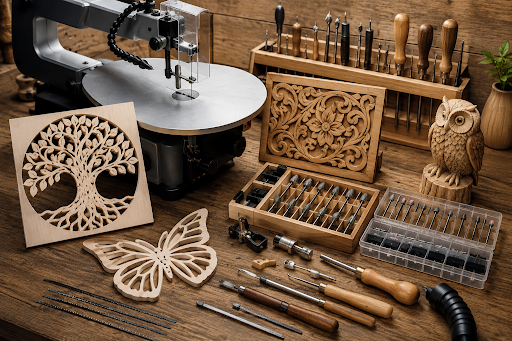
Whether you are crafting fretwork, puzzles, or delicate decorative pieces, success depends on choosing the right approach and equipment from the start. Scroll saw carving opens the door to intricate, detailed woodwork that few other techniques can match. This guide walks through why the choice matters, the factors that separate good results from frustrating ones, and the questions to ask before you begin. A thoughtful start spares you the early frustration that causes many beginners to abandon the craft before they discover how rewarding it can be. With a little planning, even an ambitious first project becomes approachable rather than intimidating.
Why the Right Approach Matters
The quality of your results depends heavily on technique and equipment working together. Thoughtful scroll saw carving relies on the right blade, steady control, and well prepared stock. Getting these elements right from the beginning prevents splintered edges, broken blades, and wasted material, while setting you up for the clean, precise cuts that make this craft so rewarding. Rushing in without preparation almost always leads to ragged results that discourage rather than inspire, whereas a careful setup makes even an ambitious first project feel achievable.
Key Factors to Compare
Several practical factors shape your experience. Weigh each one before committing to a project or a setup, because small early decisions have a large effect on your finished work.
Blade Quality and Material
Blade choice drives precision. Finer blades handle tight curves and delicate detail, while coarser ones cut faster through thicker stock. Matching blade to task is fundamental to clean scroll saw carving. A blade suited to the wood and the design lets you follow your lines smoothly, while the wrong choice fights you at every turn and leaves rough edges that demand extra cleanup. Matching tension and tooth count to the material is just as important as the blade itself, since even a good blade performs poorly when it is set up incorrectly for the stock in front of you.
Fit and Use Case
Consider the kind of work you want to do. Fretwork, intarsia, and decorative cutting each demand slightly different setups, so choose equipment suited to your intended projects rather than a one size fits all approach. Being clear about your goals from the outset helps you build a setup that supports the work you actually want to make, and it spares you from buying equipment that turns out to be wrong for your chosen style.
Long Term Value
Durable equipment and quality consumables cost more upfront but reward you with consistent performance and fewer interruptions, making them the better value for anyone who carves regularly. Cheap blades that snap or dull quickly cost more in frustration and waste than they ever save at the register, and the time lost to replacing them mid project often outweighs any saving.
Questions to Ask Before You Begin
Ask what type of projects you most want to create, what thickness of stock you will typically work with, and how much detail your designs require. Honest answers guide your equipment choices and help you approach scroll saw carving with a setup that matches your goals rather than one that constantly fights against them. Taking a few minutes to think through these questions before you start saves hours of frustration and wasted material later on. The answers also help you decide which accessories and consumables are worth buying first rather than acquiring on impulse.
Final Thoughts
Mastering this craft comes down to preparation, the right equipment, and a willingness to refine your technique with practice over time. Match your blades to your projects, prepare your stock carefully, and invest in tools that perform reliably, and your skill will grow steadily with every piece you complete. Patience early on pays lasting dividends. Pairing your saw work with quality wood carving tools, a rotary expands what you can create, letting you add shaping and detail that bring your finished pieces to life.