
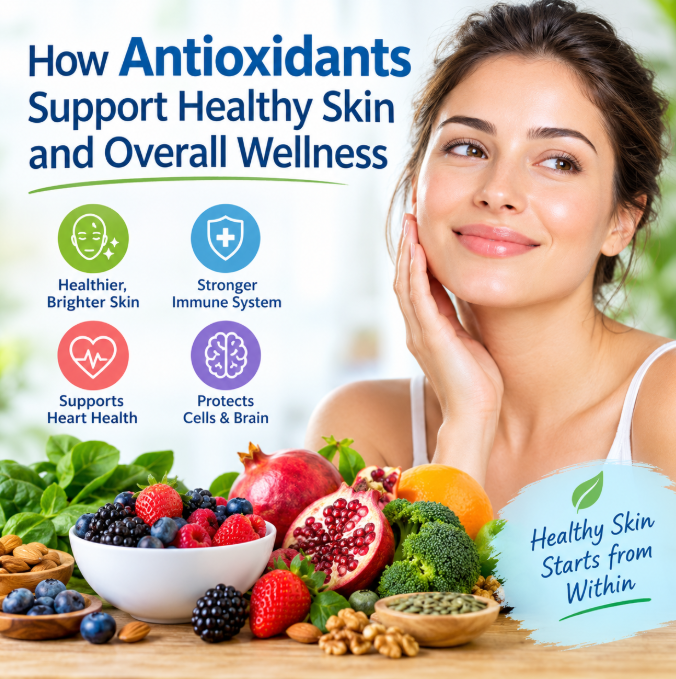
Healthy skin depends on more than skincare products. Your diet, hydration, sleep, physical activity, stress levels and general nutrition can all affect how your skin looks and functions. Antioxidants form an important part of this picture because they help protect cells from oxidative stress.
You naturally produce molecules called free radicals during normal processes such as breathing, digestion and energy production. Your body also encounters free radicals through environmental factors such as ultraviolet radiation, air pollution and cigarette smoke. When free-radical activity becomes excessive compared with the body’s antioxidant defences, oxidative stress can occur.
Antioxidants help maintain balance by interacting with free radicals and limiting oxidative damage. You can obtain antioxidants from a wide range of fruits, vegetables, nuts, seeds, legumes, whole grains and other nutritious foods.
Although antioxidants support normal skin function, they should not be viewed as a cure for skin diseases. A balanced diet and appropriate medical care remain important when you have persistent or unusual skin changes.
What Are Antioxidants?
Antioxidants are substances that help protect cells from oxidative damage. Your body produces some antioxidants naturally, while you obtain others through food.
Examples include vitamin C, vitamin E and carotenoids. Plant foods also contain many antioxidant compounds, including polyphenols and flavonoids.
Free radicals are chemically reactive molecules. Your body produces them as part of normal metabolism, and immune cells also use reactive molecules as part of normal biological processes. Problems can arise when oxidative activity becomes excessive or antioxidant defences cannot maintain sufficient balance.
This does not mean that you need to eliminate free radicals completely. Your body needs controlled oxidative processes for normal physiological functions. The aim is to support healthy balance rather than remove every reactive molecule.
Why Antioxidants Matter for Skin
Your skin provides a physical barrier between your body and the outside environment. It constantly encounters sunlight, temperature changes, pollutants and other environmental factors.
These exposures can contribute to oxidative stress within skin cells. Antioxidants can help support the body’s natural protective systems.
A diet rich in antioxidant-containing foods may therefore contribute to normal skin health in several ways:
- Supporting protection against oxidative stress
- Helping maintain normal skin structure
- Supporting collagen production through adequate vitamin C intake
- Supporting normal immune function
- Providing nutrients needed for normal cell function
- Contributing to overall nutritional wellbeing
However, eating more antioxidants does not automatically produce clearer or younger-looking skin. Skin health depends on many factors, including genetics, age, hormones, sun exposure, hydration, sleep and existing medical conditions.
Vitamin C and Skin Health
Vitamin C is one of the best-known dietary antioxidants. Your body requires vitamin C for several important functions, including normal collagen formation.
Collagen provides structural support to the skin and other tissues. Adequate vitamin C intake therefore contributes to normal collagen production.
You can obtain vitamin C from foods such as:
- Oranges and other citrus fruits
- Kiwi fruit
- Strawberries
- Blackcurrants
- Peppers
- Broccoli
- Brussels sprouts
- Tomatoes
Eating a variety of fruit and vegetables can help you obtain vitamin C without relying on high-dose supplements.
Topical vitamin C products also appear in many skincare routines. However, topical products differ in formulation, concentration and stability, so you should choose skincare products carefully and follow product instructions.
Vitamin E and Skin Protection
Vitamin E includes a group of fat-soluble compounds with antioxidant activity. You can find vitamin E naturally in foods such as nuts, seeds, vegetable oils and some green vegetables.
Vitamin E helps protect cells from oxidative damage. Adequate dietary intake contributes to normal health, including normal skin function.
Good food sources include:
- Almonds
- Sunflower seeds
- Hazelnuts
- Avocado
- Sunflower oil
- Wheat germ
- Spinach
You do not generally need very large amounts of vitamin E to support normal nutrition. High-dose supplementation can create risks and may interact with certain medicines, so discuss supplementation with a healthcare professional when appropriate.
Carotenoids and Colourful Foods
Carotenoids are plant pigments found in many yellow, orange, red and green foods. Beta-carotene is a well-known example.
Foods containing carotenoids include carrots, sweet potatoes, pumpkin, spinach, kale, peppers and tomatoes.
Your body can convert beta-carotene into vitamin A. Vitamin A supports normal vision, immune function and maintenance of normal skin and mucous membranes.
Eating colourful vegetables provides a broad mixture of nutrients rather than relying on a single compound. This is one reason nutrition professionals often encourage a varied diet.
Polyphenols and Plant Foods
Plants contain numerous naturally occurring compounds called polyphenols. These include flavonoids and other plant compounds found in fruits, vegetables, herbs, tea, cocoa and other foods.
Green tea, berries, grapes, apples and many herbs contain different polyphenols.
Research continues to investigate how these compounds interact with human biology. Laboratory findings can show antioxidant activity, but results from laboratory experiments do not automatically mean that a particular food or supplement will prevent or treat a disease in humans.
For this reason, it makes sense to include a variety of plant foods in your diet rather than focusing heavily on one supposedly powerful antioxidant.
Antioxidants and the Skin Barrier
Your skin barrier helps reduce water loss and provides protection against external irritants. Maintaining this barrier requires adequate nutrition, hydration and appropriate skincare.
Antioxidant-containing foods can contribute useful vitamins and plant compounds to your diet, but they represent only one part of skin care.
You can also support your skin barrier by:
- Using gentle cleansing products
- Avoiding excessive washing
- Applying a suitable moisturiser when needed
- Protecting your skin from excessive sun exposure
- Avoiding smoking
- Drinking enough fluid
- Eating a balanced diet
- Getting sufficient sleep
If your skin becomes persistently dry, cracked, painful, inflamed or unusually sensitive, consider seeking medical advice rather than relying solely on dietary changes.
How Antioxidants Support Overall Wellness
The benefits of antioxidant-rich foods extend beyond the skin. Fruits, vegetables, nuts, seeds, whole grains and legumes provide combinations of vitamins, minerals, fibre and other nutrients.
A diet containing a variety of these foods can contribute to overall nutritional adequacy.
For example, fruit and vegetables provide vitamin C, folate, carotenoids, potassium and many plant compounds. Nuts and seeds provide vitamin E, minerals, healthy fats and protein. Legumes provide protein, fibre, folate and minerals.
Instead of thinking about antioxidants as a single category of nutrients, consider them part of a broader healthy eating pattern.
Antioxidants and Healthy Ageing
Ageing naturally changes the structure and function of your skin. You may notice changes such as fine lines, dryness, altered pigmentation and reduced elasticity.
Oxidative stress represents one factor studied in relation to ageing, but it does not explain every change associated with getting older.
You cannot stop normal ageing through antioxidant supplements. However, maintaining good nutrition can help provide the nutrients your body needs for normal physiological function.
Sun protection also plays an important role in maintaining skin health. Regular exposure to ultraviolet radiation can contribute to premature skin ageing and increases the risk of skin cancer. Using suitable sun protection and avoiding excessive exposure can therefore form an important part of a healthy skincare routine.
Foods That Provide Antioxidants
You can include antioxidant-containing foods throughout the day without following a complicated diet.
Berries
Blueberries, strawberries, raspberries and blackberries contain vitamin C and various plant compounds. Add them to porridge, yoghurt or smoothies, or enjoy them as a snack.
Leafy Green Vegetables
Spinach, kale and other leafy greens provide carotenoids, vitamin C, folate and other nutrients.
Citrus Fruits
Oranges, grapefruit, lemons and other citrus fruits provide vitamin C. Whole fruit also provides fibre.
Nuts and Seeds
Almonds, sunflower seeds, hazelnuts and other nuts and seeds can provide vitamin E, healthy fats and minerals.
Tomatoes
Tomatoes contain lycopene, a carotenoid that has attracted considerable research interest. Cooking tomatoes can increase the amount of lycopene that your body can absorb.
Beans and Pulses
Beans, lentils and chickpeas provide fibre, protein, minerals and various plant compounds.
Green Tea
Green tea contains polyphenols called catechins. You can include it as part of a balanced diet if you enjoy it and can tolerate caffeine.
Should You Take Antioxidant Supplements?
A common question involves whether antioxidant supplements provide more benefits than antioxidant-rich foods.
In many situations, obtaining nutrients through a varied diet provides a practical approach. Supplements can be useful when you have a diagnosed deficiency, restricted dietary intake or another recognised nutritional need.
More is not always better. High doses of certain antioxidant supplements can cause adverse effects, and some supplements can interact with medicines.
For example, excessive vitamin A can be harmful, while high-dose vitamin E can increase certain health risks. Supplements containing multiple ingredients can also create interaction concerns.
Before taking high-dose antioxidant supplements, discuss your needs with a qualified healthcare professional, particularly if you take prescription medicines, have a chronic condition, are pregnant or breastfeeding, or plan to give supplements to a child.
Antioxidants and Granuloma Annulare
Granuloma annulare is a skin condition that can produce ring-shaped or circular raised areas on the skin. It is generally considered a benign condition, although its appearance can cause concern or cosmetic distress.
The exact cause is not always clear, and antioxidant-rich foods should not be presented as a proven treatment for granuloma annulare.
However, maintaining adequate nutrition can support general health while you follow an appropriate care plan. If you are specifically researching nutritional or complementary approaches, you may also want to read about Herbal Supplements for Granuloma Annulare while keeping in mind that supplements should not replace an appropriate diagnosis or treatment plan.
A dermatologist can assess persistent, spreading or unusual skin changes and determine whether testing or treatment is necessary.
Antioxidants Are Not a Substitute for Medical Treatment
Antioxidants can support normal nutrition, but they cannot replace medical assessment.
You should seek professional advice if you notice:
- A new skin lesion that does not improve
- A rapidly changing mark
- Persistent bleeding or crusting
- Significant pain
- Severe itching
- Widespread skin changes
- A rash accompanied by fever or feeling unwell
- Skin changes that concern you
Several skin conditions can look similar during their early stages. A healthcare professional can help identify the cause and recommend appropriate treatment.
This distinction matters because a dietary approach that may support general wellness cannot necessarily treat an infection, inflammatory condition, allergic reaction or other medical problem.
Simple Ways to Increase Antioxidant-Rich Foods
You do not need to completely change your diet overnight. Small, consistent changes can make a healthy eating pattern easier to maintain.
Try adding berries to breakfast, keeping fruit available for snacks, adding leafy greens to meals and including beans or lentils several times each week.
You can also replace some highly processed snacks with nuts, seeds or fresh fruit. Choose whole foods regularly and aim for variety rather than concentrating on one nutrient.
A simple plate can include vegetables, a source of protein, a whole-grain carbohydrate and a moderate amount of healthy fat. This approach provides a broader range of nutrients than focusing on antioxidants alone.
Adequate hydration also matters. Water supports normal physiological functions, while excessive alcohol consumption can negatively affect overall health and may contribute to dehydration.
Lifestyle Habits That Complement Good Nutrition
Nutrition works alongside other daily habits.
Regular physical activity supports general health and can contribute to healthy ageing. Adequate sleep helps support normal immune and metabolic functions. Stress management can also help you maintain healthy routines.
Sun protection deserves particular attention for skin health. Consider using broad-spectrum sunscreen, wearing protective clothing and seeking shade during periods of strong sunlight.
Avoid smoking because tobacco smoke exposes your body to numerous chemicals and contributes to oxidative stress and many other health risks.
When you combine balanced nutrition with these habits, you create a broader foundation for skin and overall wellness.
A Practical Daily Approach
A simple day of antioxidant-rich eating might include fruit with breakfast, vegetables with lunch, a handful of nuts as a snack and a meal containing several colourful vegetables in the evening.
You can vary your choices according to your dietary preferences, budget and nutritional needs.
For example:
Breakfast: Oats with berries and seeds.
Lunch: A mixed vegetable salad with chickpeas, whole grains and a healthy dressing.
Snack: An orange or a small serving of nuts.
Dinner: Fish, beans or another protein source with leafy vegetables and colourful vegetables.
This type of pattern provides a range of nutrients without requiring you to calculate the antioxidant content of every meal.
Frequently Asked Questions
Can antioxidants improve skin health?
Antioxidants contribute to normal cellular protection and can form part of a nutritious diet. However, they cannot guarantee clearer, younger-looking or disease-free skin.
Which foods contain the most antioxidants?
Many foods contain antioxidant compounds, including berries, colourful vegetables, leafy greens, nuts, seeds, beans, tea and some fruits. Eating a variety of foods is more useful than concentrating on one food.
Can vitamin C support healthy skin?
Yes. Vitamin C contributes to normal collagen formation and protects cells from oxidative stress. Citrus fruits, berries, peppers and several vegetables provide vitamin C.
Should I take antioxidant supplements for skin health?
Not necessarily. If you eat a varied diet, you may already obtain many antioxidants from food. Speak with a healthcare professional before taking high-dose supplements, particularly if you use medicines or have an existing health condition.
Can antioxidants cure skin conditions?
No. Antioxidants support normal nutrition but should not be described as cures for skin diseases. Persistent or concerning skin changes require appropriate medical assessment.
Are antioxidant foods suitable for everyone?
Most antioxidant-rich foods can form part of a balanced diet, but individual dietary needs vary. Food allergies, intolerances, kidney conditions and other health issues may affect which foods you should choose.
Final Thoughts
Antioxidants play an important role in protecting cells from oxidative stress and form part of a healthy nutritional pattern. Vitamins such as C and E, carotenoids and plant compounds found in fruits, vegetables, nuts, seeds and other foods can contribute to normal skin and overall health.
You do not need to chase individual antioxidant products or follow an extremely restrictive diet. A varied eating pattern, good hydration, regular activity, sufficient sleep and sensible sun protection provide a stronger foundation for long-term wellbeing.
If you are concerned about a skin condition, use nutrition as part of your general health routine rather than as a replacement for professional care. You can also explore Herbal Care Products for additional information about supplements and natural health products, while checking with a healthcare professional before adding supplements to your routine.
Medical Disclaimer
This article provides general educational information and does not replace diagnosis, treatment or personalised advice from a qualified healthcare professional. Antioxidants and antioxidant-rich foods may support general nutrition but should not be considered a cure for granuloma annulare or another medical condition. If you have persistent, changing or concerning skin symptoms, seek appropriate medical advice.