
Sydney generates waste from homes, businesses, construction projects, manufacturing facilities, and commercial operations every day. Managing these materials effectively requires more than simply collecting rubbish and sending it to landfill. Modern systems focus on sorting, processing, recovering, and reusing materials wherever practical. This approach can reduce disposal volumes while creating opportunities to return valuable resources to productive use. As businesses and communities look for more efficient environmental practices, Sydney waste management increasingly depends on well-designed systems that can handle different material streams safely, consistently, and efficiently.
Why Efficient Waste Processing Matters?
Waste management begins with understanding what materials are being generated and how they should be handled. Paper, cardboard, plastics, glass, organic materials, metals, tyres, and construction waste can require very different processing methods. When recyclable materials are mixed together or contaminated, recovering them becomes more difficult and may reduce their value.
The scale of the challenge is significant. The City of Sydney reports that commercial and industrial activities generate around 85% of Sydney’s waste, while only about half of that material is recycled. This highlights why businesses need practical systems that support separation and recovery rather than relying primarily on disposal.
Key Technologies Used in Waste Recovery
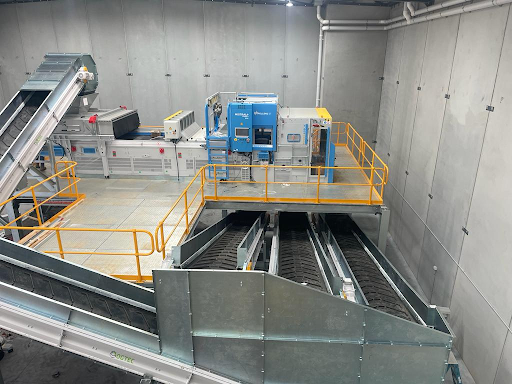
Modern processing facilities can combine several technologies to improve material recovery. Shredders reduce large or bulky materials into manageable sizes, making subsequent processing easier. Screens can then separate materials according to size or shape.
Optical sorting technology provides another important step. Near-infrared sensors can identify different material types moving along a conveyor, while air jets separate selected materials from the wider stream. Magnets can recover ferrous metals, whereas eddy-current separators can extract non-ferrous metals.
These technologies are particularly useful because waste management in Sydney, Australia involves varied waste streams with different physical characteristics. A processing line therefore needs to be designed around the materials it receives, its required recovery rates, and the quality of the output materials.
Supporting Recycling Across Different Waste Streams
Effective recycling is not limited to household packaging. Commercial and industrial operations may generate large quantities of cardboard, plastics, glass, textiles, tyres, organic material, and construction and demolition waste.
Construction and demolition materials are especially important across NSW. According to the NSW State of the Environment, this stream accounted for 56% of all waste generated and 68% of waste recycled on average during the five years to 2023–24.
Processing systems can recover materials such as timber, metals, aggregates, and other usable fractions from construction waste. Likewise, dedicated systems can process plastics through stages such as sorting, shredding, washing, and granulation, while glass can be sorted, screened, crushed, and sized for further use.
Moving Toward a Circular Waste Economy
The future of waste management in Sydney, Australia is increasingly connected to the principles of a circular economy. Instead of treating discarded materials as having no further value, circular systems aim to keep resources in use through reuse, recycling, recovery, and better product design.
The City of Sydney’s 2026–2035 strategy aims to divert 90% of waste from landfill by June 2035 and places greater emphasis on reuse, repair, recycling, and circular design.
Achieving these goals will require cooperation among businesses, councils, waste operators, manufacturers, and communities. It will also require processing infrastructure capable of handling increasing volumes while maintaining material quality.
Conclusion
Effective waste systems can transform discarded materials into valuable resources while reducing pressure on landfill infrastructure. For businesses seeking more sustainable operations, waste management in Sydney should therefore be viewed as a resource-recovery process rather than simply a disposal task. Better sorting, separation, size reduction, and recovery technologies allow different waste streams to be processed according to their characteristics and potential end uses.