
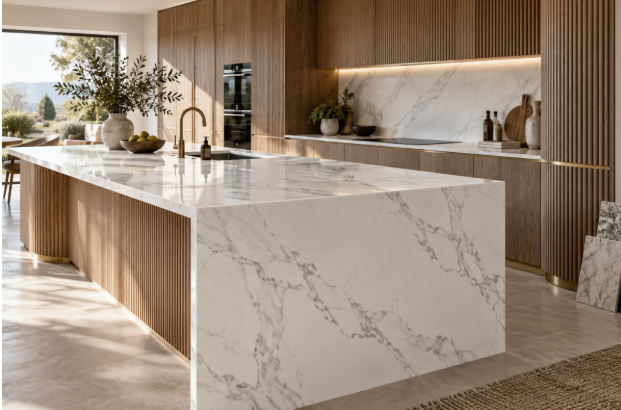
Kitchen design trends have shifted significantly over the past decade, with homeowners increasingly drawn to surfaces that combine the visual richness of natural stone with the practicality of engineered materials. A marble quartz worktop delivers exactly that balance, offering the elegant veining associated with traditional marble while addressing many of the maintenance concerns that come with natural stone surfaces.
What Makes This Material Different From Natural Marble
Natural marble is porous and prone to staining, etching, and scratching, which makes it a demanding surface to maintain in a busy kitchen. Engineered quartz surfaces are manufactured by combining crushed quartz with resin binders, then finished with pigments and patterns designed to replicate the look of marble veining. The result is a surface with the aesthetic appeal of marble but significantly improved resistance to everyday wear.
How the Manufacturing Process Works
Quartz worktops are produced using a process that compresses ground quartz, resin, and pigments under intense pressure and heat. This engineering approach allows manufacturers to create consistent veining patterns and colour variations that mimic natural stone closely, while also controlling porosity levels that natural marble simply cannot match. The finished marble quartz worktop slabs are then cut and polished to the required dimensions for kitchen installation.
Durability Compared to Traditional Stone
One of the main reasons homeowners choose a marble quartz worktop over natural marble is durability. Quartz surfaces resist staining from common kitchen substances like wine, coffee, and citrus juices far better than porous natural stone. They also tend to hold up better against scratches from everyday kitchen activity, though using cutting boards is still recommended to preserve the surface finish over time.
Maintenance Requirements to Keep in Mind
Unlike natural marble, which often requires periodic sealing to maintain stain resistance, quartz surfaces generally do not need sealing at all due to their non-porous composition. Routine cleaning with mild soap and water is typically sufficient to keep the surface looking its best, making it a practical choice for households that want a low-maintenance kitchen surface.
Design Versatility in Modern Kitchens
Beyond marble-inspired patterns, quartz worktops come in an extensive range of colours and finishes, allowing homeowners to match their kitchen design vision closely. Some manufacturers also offer bold veining styles inspired by other natural stones, giving homeowners flexibility if they want a departure from classic white and grey marble aesthetics down the line.
Comparing Cost Against Natural Stone Options
While pricing varies by brand and pattern complexity, engineered quartz is often comparable to or more affordable than premium natural marble, particularly when factoring in long-term maintenance costs. Natural stone alternatives like Azul Platino granite carry distinct veining and colour characteristics worth comparing against engineered options.
Installation Considerations
Professional installation is recommended for quartz worktops due to their weight and the precision required for seamless seam matching between slabs. Proper templating before fabrication ensures an accurate fit around sinks, hobs, and other kitchen fixtures, reducing the risk of costly adjustments after installation.
Choosing the Right Pattern for Your Kitchen
Selecting a marble quartz worktop pattern often comes down to how much visual contrast a kitchen design calls for. Subtle, fine veining tends to suit smaller kitchens where a busier pattern might feel overwhelming, while bolder veining can serve as a striking focal point in larger, more open kitchen layouts. Viewing full slab samples in natural light, rather than small swatches, helps homeowners judge how the pattern will look once installed.
Conclusion
Choosing between engineered quartz and natural stone ultimately depends on individual priorities around maintenance, budget, and aesthetic preference. For homeowners drawn to bold, distinctive veining, exploring options like Azul Platino granite alongside marble-effect quartz provides a fuller picture of what’s available before making a final decision. Weighing durability against classic natural stone character helps ensure the chosen surface suits both the kitchen’s design and daily household use for years to come.