
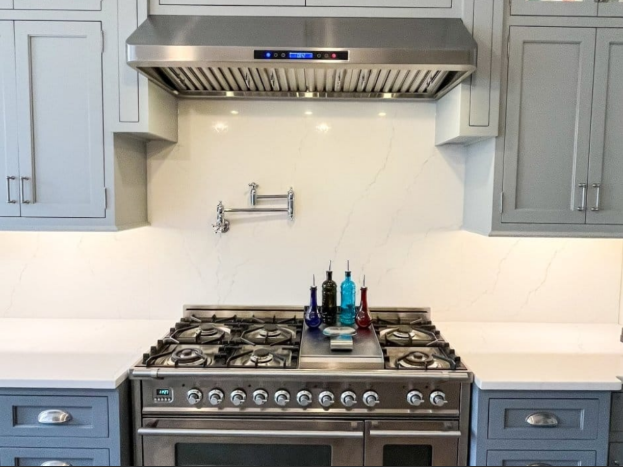
Kitchen ventilation plays an important role in controlling smoke, grease, heat, steam, and cooking odors. For kitchens where cabinets are installed directly above the range, a stainless steel under cabinet vent hood can provide a practical ventilation solution without requiring a large chimney-style structure. These hoods are designed to fit beneath upper cabinetry while drawing contaminated air away from the cooking surface. However, choosing the right model involves more than appearance. Airflow, ducting, hood width, installation height, filter design, noise, and cooking habits all affect how well the system performs.
What Is a Stainless Steel Under Cabinet Vent Hood?
A stainless steel under cabinet vent hood is a range hood designed to mount beneath kitchen cabinetry directly above a cooktop or range.
Its compact form makes it especially useful in kitchens where homeowners want to preserve cabinet storage while still providing dedicated ventilation.
Most under-cabinet models include a blower, grease filters, built-in lighting, and controls for different fan speeds. Depending on the design, the hood may vent outdoors through ductwork or operate in a recirculating configuration.
Stainless steel is commonly used because it is durable, heat resistant, relatively easy to clean, and visually compatible with many modern kitchen appliances.
Why Is Stainless Steel a Popular Material?
Stainless steel offers several advantages in cooking environments.
It tolerates heat well and does not absorb grease or odors in the same way some porous materials can. Its smooth surface also makes routine cleaning easier.
A stainless steel under cabinet vent hood can be wiped with an appropriate cleaner to remove fingerprints, grease, and cooking residue.
The material also works well with a wide range of kitchen styles, including modern, transitional, industrial, and professional-inspired designs.
However, not all stainless finishes are identical. Different grades, thicknesses, and surface finishes can affect durability, appearance, and resistance to scratching.
How Wide Should an Under Cabinet Hood Be?
Width should be selected according to the cooking surface.
In many installations, the hood should be at least as wide as the range or cooktop. A wider capture area may help collect smoke and steam that move outward as they rise.
A stainless steel under cabinet vent hood should also fit comfortably between surrounding cabinets without restricting installation access.
Before purchasing, measure:
- Cooktop width
- Available cabinet opening
- Hood depth
- Distance to nearby walls
- Duct position
- Electrical access
Exact sizing should always follow the installation requirements for both the cooking appliance and the hood.
How Much Airflow Do You Need?
Airflow is measured in cubic feet per minute, or CFM.
The required airflow depends on how much heat, grease, smoke, and steam the cooking appliance produces.
High-output gas burners, frequent frying, wok cooking, and searing usually require more ventilation than light cooking on a smaller electric surface.
A stainless steel under cabinet vent hood should therefore be selected according to cooking intensity rather than simply choosing the highest CFM rating available.
Excessive airflow can increase noise and may create negative pressure inside a tightly sealed home. In some jurisdictions, high-capacity systems can also trigger makeup air requirements.
Ducted or Recirculating: Which Is Better?
A ducted hood removes air from the kitchen and exhausts it outdoors.
This method is generally more effective for removing heat, moisture, grease particles, and odors because contaminated air leaves the building entirely.
A recirculating system filters the air and returns it to the kitchen. These systems may use grease filters and activated carbon filters to reduce airborne particles and odors.
When possible, a ducted stainless steel under cabinet vent hood is often preferred for frequent cooking.
However, recirculating models can be useful when exterior ducting is impractical because of building layout, rental restrictions, or construction limitations.
Why Does Duct Design Matter?
Good ductwork helps the blower move air efficiently.
A powerful hood connected to undersized or poorly arranged ducting may perform below expectations. Long runs, multiple sharp turns, and restrictive exterior caps all increase airflow resistance.
For better performance:
- Follow the recommended duct diameter
- Use smooth metal ducting
- Keep the run as short as practical
- Minimize elbows
- Avoid unnecessary reductions in duct size
A correctly installed stainless steel under cabinet vent hood can operate more efficiently and often more quietly when the duct path is well designed.
What Type of Filters Should You Choose?
Range hood filters capture grease before it enters the blower and duct system.
Baffle filters are common in higher-capacity hoods because they are durable and often dishwasher safe. Mesh filters can also be effective but may require different cleaning intervals.
Filter maintenance directly affects ventilation performance.
A dirty filter can restrict airflow and force the blower to work harder. It may also contribute to grease buildup and lingering odors.
For that reason, homeowners should clean filters according to their cooking frequency rather than waiting until grease accumulation becomes obvious.
How High Should an Under Cabinet Hood Be Installed?
Mounting height affects both safety and capture performance.
If a hood is installed too high, smoke and steam may spread before reaching the intake area. If installed too low, it can interfere with cooking and may be exposed to excessive heat.
Manufacturers specify acceptable installation heights based on hood design and appliance type.
A stainless steel under cabinet vent hood should always be installed within those specified limits.
Gas cooking surfaces may have different clearance requirements than electric appliances, so installers should check both the range and hood documentation.
How Can You Reduce Vent Hood Noise?
Range hood noise is affected by blower speed, duct resistance, construction quality, and installation.
A properly sized hood can often handle everyday cooking at a lower fan setting, which helps reduce sound.
Correct duct sizing is equally important. Narrow ducts and excessive bends can create turbulence and increase noise.
Other helpful features may include variable fan speeds, insulated motor housings, or remote blowers on certain systems.
Regularly cleaning filters also helps maintain smoother airflow.
Which Features Are Most Useful?
Modern under-cabinet hoods may include several convenience features.
Useful options can include:
- Multiple fan speeds
- LED task lighting
- Dishwasher-safe filters
- Delay-off timers
- Digital controls
- Remote operation
- Automatic heat sensing
Task lighting is particularly helpful because upper cabinets can block ceiling light from reaching the cooking surface.
However, buyers should prioritize airflow, proper capture area, filter design, and duct compatibility before considering electronic extras.
Can an Under Cabinet Hood Work in an Outdoor Kitchen?
Outdoor cooking environments have different ventilation requirements from indoor kitchens.
Open-air spaces may naturally disperse some heat and smoke, but covered outdoor kitchens can trap combustion products, grease, and heat beneath roofs or enclosed structures.
A hood may therefore be useful or required depending on the appliance, roof design, wall configuration, local code, and manufacturer instructions.
Outdoor installations also require equipment specifically approved for exterior conditions. Indoor-rated components may not be designed to tolerate moisture, temperature changes, or weather exposure.
What Should You Check Before Buying?
Before choosing a stainless steel under cabinet vent hood, review the complete installation environment.
Important factors include:
- Range width
- Burner output
- Cabinet dimensions
- Hood depth
- Duct route
- Available electrical supply
- Filter type
- Noise rating
- Makeup air requirements
- Mounting height
It is also worth considering long-term maintenance. Filters should be easy to remove, replacement parts should be accessible, and the stainless surface should be straightforward to clean.
A hood that is difficult to maintain may gradually lose effectiveness even if it performs well when new.
Conclusion
Under-cabinet ventilation can be a practical choice for kitchens that need effective smoke and grease control without sacrificing upper cabinetry. Performance depends on correct sizing, adequate airflow, proper ductwork, suitable mounting height, and regular filter maintenance. Homeowners planning exterior cooking spaces may also ask Do I need a vent hood for an outdoor kitchen?, The answer depends on whether the area is covered or enclosed, the type of cooking appliance being used, manufacturer guidance, and applicable local building requirements. A well-selected stainless steel under-cabinet vent hood can provide effective everyday ventilation while maintaining a compact kitchen layout. By reviewing airflow, ducting, filters, dimensions, noise, and installation conditions before purchasing, homeowners can choose a system that supports both cleaner air and more comfortable cooking.