
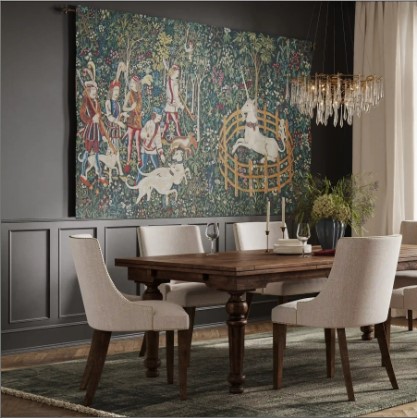
The art of tapestry weaving dates back thousands of years, but few themes have captured human imagination quite like the unicorn. A medieval unicorn tapestry brings together rich symbolism, master craftsmanship, and timeless visual storytelling. Whether you are drawn to history, mythology, or simply refined interior design, these woven masterpieces continue to hold their place as icons of artistic excellence. Their intricate details and historical charm make them a captivating focal point in both traditional and modern spaces.
The Historical Roots of Unicorn Tapestries
Unicorn tapestries first rose to widespread prominence in Europe during the late 15th and early 16th centuries. Among the most celebrated are the Hunt of the Unicorn series and The Lady and the Unicorn collection. Woven in workshops across Flanders and France, these pieces were commissioned by wealthy nobles as symbols of power and prestige. They were displayed in grand halls to communicate status, faith, and cultural refinement. Their survival over centuries is a testament to both their material quality and their enduring cultural significance.
What Makes the Unicorn a Timeless Symbol
The unicorn has carried deep symbolic meaning across many cultures and centuries. In medieval Christian tradition, the unicorn represented purity, grace, and divine virtue. Its horn, known as the alicorn, was believed to possess healing powers and the ability to neutralize poison. In secular literature and art, the unicorn stood for untamable freedom and noble strength. These layered meanings gave artists and patrons alike a rich visual language to work with, making the unicorn one of the most versatile and enduring motifs in decorative art history.
The Craftsmanship Behind a Medieval Unicorn Tapestry
Creating an authentic medieval unicorn tapestry requires extraordinary skill and patience. Traditional tapestries were handwoven on upright looms using wool, silk, and often metallic threads of gold or silver. Weavers worked from detailed cartoons, which were full-scale drawings placed behind the loom as guides. A single tapestry could take months or even years to complete.
How to Incorporate a Medieval Tapestry Into Your Space
Hanging a tapestry on your wall instantly transforms the atmosphere of any room. These pieces work beautifully in living rooms, studies, dining rooms, and bedrooms. For the best visual impact, choose a wall with enough open space to allow the tapestry to be viewed from a distance. A plain, neutral-colored wall will let the tapestry stand out as the focal point. Pair it with wooden furniture, warm lighting, and rich textiles to build a cohesive aesthetic that complements the historical character of the piece. A quality medieval tapestry can serve as both an artistic centerpiece and a conversation starter.
Caring for Your Tapestry the Right Way
Proper care ensures your unicorn tapestry retains its beauty for generations. Avoid hanging it in direct sunlight, as prolonged UV exposure fades colors over time. Dust lightly using a soft brush or low-suction vacuum attachment. For storage, roll the tapestry around a padded tube rather than folding it to prevent permanent crease lines. Spot clean only with mild, pH-neutral solutions and allow it to air dry completely. Avoid machine washing unless the manufacturer specifically states it is safe to do so.
Conclusion
A medieval unicorn tapestry is far more than a wall hanging. It is a piece of living history that connects your home to centuries of artistic tradition and cultural storytelling. From the mythological power of the unicorn to the mastery of Flemish weaving, every element of these works carries meaning. If you are looking to elevate your space with something genuinely distinctive, tapestry wall decor rooted in medieval artistry offers an unmatched combination of beauty, depth, and heritage.