
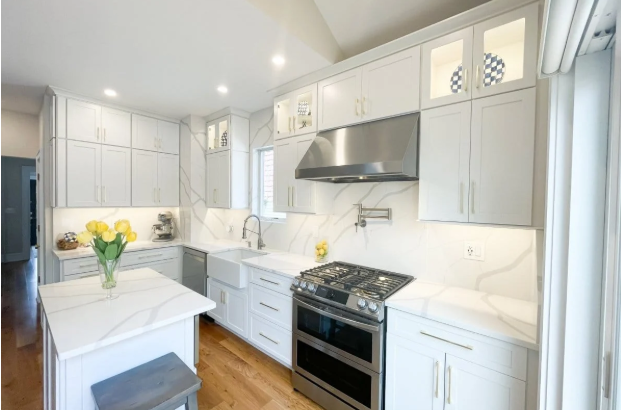
A range hood has an important job: capturing smoke, grease, steam, and cooking odors before they spread throughout the kitchen. Choosing the correct width and airflow capacity is particularly important when working with a larger cooking surface. An under cabinet range hood 42 can provide broader coverage for wide cooktops while remaining integrated beneath existing cabinetry. However, width alone does not determine performance. Cooktop type, heat output, ductwork, mounting position, and cooking habits all influence which ventilation setup makes sense.
Why Hood Width Matters
The hood should provide sufficient coverage across the cooking surface so rising exhaust reaches the capture area rather than escaping around the edges. General sizing guidance recommends choosing a hood at least as wide as the cooktop, with additional width often preferred for wall-mounted and under-cabinet installations.
A 42-inch hood is therefore suited to larger residential cooking surfaces, particularly 36- to 42-inch ranges and cooktops. A wider hood can provide greater capture area, which becomes useful when multiple burners are operating simultaneously.
CFM Should Match the Cooking Setup
Airflow is measured in cubic feet per minute, or CFM. The appropriate rating depends on the cooking appliance rather than simply the hood’s physical width.
For gas cooking equipment, a common sizing method uses the appliance’s total BTU output. One industry guide recommends approximately 100 CFM for every 10,000 BTUs of gas cooking power. For electric cooktops, a width-based calculation is commonly used instead.
For an under-cabinet range hood 42, this means homeowners should consider the actual burner output and cooking habits before selecting the blower. Someone who frequently sears meat, cooks with multiple burners, or produces substantial heat and smoke may need more airflow than someone who primarily prepares low-heat meals.
Under-Cabinet Installation Has Practical Advantages
Under-cabinet hoods are designed to fit beneath existing cabinetry, making them useful for kitchens where preserving the current layout is important. They can provide substantial ventilation without introducing the visual height of a chimney-style hood.
A 42-inch configuration can also create a broad capture area while remaining relatively integrated into the cabinetry. Current 42-inch under-cabinet models are available with different airflow levels and installation configurations, including ducted and ductless options.
Before installation, check the hood’s required mounting height, cabinet dimensions, electrical requirements, duct outlet location, and minimum duct size. Manufacturer installation documentation should always take precedence over general sizing rules.
Consider Filters, Noise, and Maintenance
Filtration is another important part of range hood performance. Grease filters capture particles generated during cooking and require regular cleaning to maintain proper airflow. Metal filters may be washable, but the cleaning frequency depends on cooking frequency and the manufacturer’s instructions.
Noise should also be considered when comparing models. Higher airflow can be associated with greater operating noise, although motor design, duct configuration, and installation can influence perceived sound levels.
An under-cabinet range hood 42 should therefore be evaluated as a complete ventilation system rather than based solely on its CFM number. Width, blower capacity, filtration, ducting, installation height, and maintenance requirements all contribute to its effectiveness.
Choosing the Right Configuration
A larger hood is not automatically the best option for every kitchen. The appliance width, cabinet dimensions, cooking style, fuel type, BTU output, and available ductwork should guide the decision.
For homeowners considering alternatives across larger cooking setups, a 60 hood range may provide substantially more coverage than necessary for a standard residential cooktop, so sizing should always begin with the actual appliance and installation space.
Conclusion
A 60 hood range is not automatically a better choice simply because it offers greater coverage. The right ventilation system should correspond to the cooking surface, heat output, kitchen layout, ductwork, and daily cooking habits. For larger residential cooktops, a correctly sized 42-inch under-cabinet hood can balance broad capture coverage with an integrated installation, provided its airflow and ventilation configuration are appropriate for the appliance.