
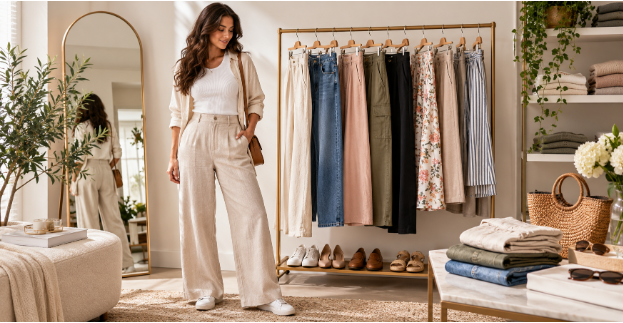
Building a versatile wardrobe starts with understanding how different clothing pieces work together. While tops often receive the most attention, the lower half of an outfit has a major influence on its overall silhouette, comfort, and practicality.
Today, bottoms for women are available in a wide range of cuts, fabrics, rises, lengths, and styles. From relaxed trousers and wide-leg pants to skirts, joggers, and tailored options, each design serves a different purpose. Understanding these differences makes it easier to choose pieces that suit an occasion while also providing comfortable movement.
What Are the Main Types of Women’s Bottoms?
Women’s bottoms include virtually every garment designed for the lower half of the body. Common categories include trousers, jeans, leggings, skirts, shorts, joggers, palazzos, culottes, and wide-leg pants.
The distinction between styles often comes down to silhouette. Straight-leg pants maintain a relatively consistent width from the thigh toward the hem, while wide-leg designs create more volume through the leg. Joggers typically have a relaxed upper portion with a tapered or elasticated ankle.
Current fashion coverage continues to highlight relaxed and wide-leg silhouettes alongside straight-leg and utility-inspired styles, reflecting the growing variety available to women.
How Does Fit Affect an Outfit?
Fit determines both comfort and visual balance.
A waistband should sit securely without digging into the skin or constantly slipping. The hips and thighs should have enough room for natural movement, while the leg should follow the intended shape of the garment.
Oversizing is not always the same as choosing a relaxed fit. A deliberately wide-leg garment is cut to provide volume, whereas buying a larger size can cause the waistband, rise, and proportions to sit incorrectly.
For this reason, checking waist and hip measurements is generally more useful than choosing a size based only on the label.
Which Bottoms Work Best for Everyday Wear?
Everyday clothing should prioritize comfort, durability, and versatility.
Straight-leg trousers are useful because their relatively even silhouette works with many different tops and footwear choices. Joggers are another practical option for travel, errands, casual activities, and relaxed days.
Wide-leg pants can provide a looser fit without sacrificing a polished appearance. They can be paired with a fitted or tucked-in top to create contrast between the volume of the lower garment and the upper half of the outfit. Fashion guides commonly recommend this proportion-based approach for wide-leg silhouettes.
Are Wide-Leg Bottoms Comfortable?
Wide-leg designs can be particularly comfortable because they do not closely restrict the thighs and calves.
However, comfort depends on fabric, waistband construction, rise, and sizing. A wide leg made from stiff fabric may feel very different from one made from a lightweight, flowing material.
The length also matters. Extremely long hems can interfere with walking or collect dirt, while cropped versions provide more visibility around the ankle and footwear.
A good fit should allow natural movement without requiring constant adjustment.
What Are the Benefits of High-Waisted Styles?
High-waisted bottoms sit at or near the natural waist and can create a more defined transition between the torso and legs.
They are commonly paired with tucked-in shirts, fitted tops, cropped layers, or shorter jackets.
The rise should be chosen according to personal comfort. A high rise that feels restrictive can be less practical than a mid-rise garment with a better overall fit.
Body proportions also matter. A rise that works well on one person may feel uncomfortable or sit differently on another.
How Does Fabric Change the Feel of Bottoms?
Fabric influences breathability, drape, structure, stretch, and durability.
Cotton is commonly used for casual garments because it is comfortable and relatively easy to maintain. Linen is lightweight and breathable, making it useful in warm conditions. Denim provides structure and durability, while viscose and rayon can create a softer, more fluid drape.
Stretch fabrics can improve freedom of movement, particularly in fitted designs.
The choice should depend on the climate, activity, occasion, and care requirements rather than appearance alone.
Which Bottoms Are Suitable for Warm Weather?
Lightweight fabrics and less restrictive silhouettes are often practical during hot weather.
Linen trousers, cotton skirts, loose palazzos, and lightweight wide-leg pants allow greater airflow than heavily structured garments.
Shorts can also provide greater ventilation, although their suitability depends on the setting.
For warm climates, fabric composition can be just as important as the style itself. A fashionable silhouette may still be uncomfortable if the material is heavy or poorly suited to the temperature.
How Can Bottoms Be Styled for Different Occasions?
The same basic silhouette can often be adapted to different settings through fabric, footwear, and the choice of top.
For casual occasions, relaxed trousers or joggers can work with simple T-shirts and comfortable footwear.
For a smart-casual setting, wide-leg trousers or tailored pants can be combined with a structured blouse or fitted knit.
For more formal situations, tailored trousers or an appropriate skirt can create a polished appearance.
The key is to consider the entire outfit rather than treating the bottom as an isolated piece.
What Are Two-Piece Sets?
Coordinated two piece sets consist of matching or deliberately coordinated garments designed to be worn together.
They can simplify outfit planning because the pieces are already designed to complement each other in terms of colour, fabric, and proportion.
Two-piece outfits can also provide versatility when the pieces are worn separately. A coordinated bottom may work with a contrasting top, while the matching top can be paired with jeans or another neutral garment.
This makes coordinated sets particularly useful for building multiple outfits from a relatively small wardrobe.
How Should You Choose Bottoms for Your Body Proportions?
There is no single bottom style that is objectively best for every body type.
Instead, consider the proportions you want to emphasize and how comfortable you feel in a particular cut.
Someone who prefers a streamlined silhouette may choose straight-leg or tapered pants. Someone who wants additional volume may prefer wide-leg or palazzo styles.
High-waisted designs can emphasize the waist, while longer, uninterrupted leg lines can create an elongated visual effect.
Personal preference should remain the deciding factor. Style recommendations are useful starting points rather than strict rules.
Why Is Length Important?
Length affects both appearance and practicality.
Ankle-length pants can draw attention toward footwear and are often easy to wear with flats, sneakers, loafers, or heels.
Full-length wide-leg pants create a more flowing silhouette but should be long enough to maintain their intended shape without dragging excessively.
Cropped styles expose more of the lower leg and can feel particularly useful during warmer months.
When selecting a length, consider both the garment’s design and the shoes you expect to wear with it.
How Can You Build a Versatile Bottom-Wear Wardrobe?
A practical wardrobe does not require a large number of nearly identical pieces.
Start with versatile neutrals and silhouettes that work with several tops.
A straight-leg or relaxed trouser can provide an everyday foundation. A wide-leg option adds variety, while a skirt or casual short introduces a different silhouette.
Adding one comfortable casual option, such as a jogger, can also make the wardrobe more practical for travel and relaxed days.
From there, colours, patterns, textures, and seasonal fabrics can add variety.
What Should You Check Before Buying?
Before purchasing a pair of bottoms, consider:
- Waist and hip measurements
- Rise
- Leg shape
- Garment length
- Fabric composition
- Stretch
- Intended use
- Care requirements
- Transparency in lighter fabrics
- Pocket placement
- Waistband construction
Checking these details can prevent common fit problems.
A garment may look appealing on a model but fit differently depending on body proportions and sizing systems. Measurement charts are therefore useful whenever they are available.
How Can You Make Bottoms Last Longer?
Proper care can significantly influence garment longevity.
Follow the care instructions provided for the fabric. Avoid unnecessarily frequent washing when the garment can simply be aired out, and use appropriate washing temperatures.
Some fabrics benefit from air drying rather than high-heat tumble drying.
Storage also matters. Structured trousers may benefit from being hung properly, while knit or stretch garments can sometimes retain their shape better when folded.
Taking care of clothing helps preserve its colour, shape, and fabric quality.
Conclusion
Choosing bottoms for women becomes much easier when you understand the relationship between fit, fabric, silhouette, length, and occasion. There is no universal style that works best for everyone; instead, the most useful wardrobe includes different shapes that accommodate changing activities and personal preferences. Coordinated two piece sets can further simplify dressing while still allowing individual pieces to be combined with other wardrobe staples. This makes them useful for anyone who wants outfits that require less planning without limiting styling possibilities.